
The term “banking collapse” typically conjures images of panicked depositors lining up outside marble-clad institutions, a la the 1929 stock market crash or the 2008 failure of Lehman Brothers. However, the most significant threat to modern global financial stability often operates in the shadows unseen, unregulated, and profoundly interconnected. This is the realm of shadow banking, a vast and intricate network of non-bank financial intermediaries that, when it falters, can trigger a silent but devastating collapse. Unlike a traditional bank run, the collapse of the shadow banking system is not marked by queues on the street but by frozen money markets, fire sales of assets, and a sudden, severe contraction of credit that chokes the real economy. This article delves deep into the anatomy of this hidden financial universe, exposing its critical vulnerabilities, chronicling its past failures, and examining the looming risks that continue to threaten the global economic landscape.
A. Deconstructing the Shadow Banking Ecosystem: More Than Just Banks
To understand its collapse, we must first define what shadow banking is and what it is not. The shadow banking system refers to a complex web of institutions and activities that perform bank-like functions, primarily credit intermediation (channeling funds from savers to borrowers), but operate outside the traditional, tightly regulated banking system. They are not subject to the same capital reserve requirements, liquidity rules, or public backstops like deposit insurance.
The key components of this ecosystem include:
A. Money Market Funds (MMFs): These funds invest in short-term debt and offer investors easy, check-writing access to their cash. They aim to maintain a stable net asset value (NAV) of $1 per share, creating the illusion of a bank account, but without the federal insurance.
B. Hedge Funds and Private Equity Firms: These entities engage in massive borrowing to leverage their investment strategies, often using complex and opaque financial instruments.
C. Special Purpose Vehicles (SPVs) and Structured Investment Vehicles (SIVs): These are off-balance-sheet entities created by banks to hold securitized assets, isolating risk (theoretically) from the parent company.
D. Finance Companies and Credit Insurers: Companies that provide loans directly to consumers and businesses, and firms like AIG that sold credit default swaps (CDS) to insure against losses.
E. The Repurchase Agreement (Repo) Market: This is the central nervous system of shadow banking. It’s a massive, short-term loan market where financial institutions use securities like Treasury bonds as collateral for overnight cash. This is a primary source of funding for the entire system.
The primary function that binds these disparate entities is maturity transformation—borrowing short-term to lend long-term. This is the same fundamental, and inherently risky, activity that traditional banks perform. However, in the shadows, this process is layered, leveraged, and lacks the safety nets that prevent a traditional bank run.
B. The Inherent Flaws: Why the Shadow Banking System is a House of Cards
The shadow banking system is not inherently evil; it emerged to meet genuine demands for credit and yield. However, its structural design contains fatal flaws that make it prone to catastrophic failure.
A. Liquidity and Maturity Mismatch: This is the core vulnerability. A hedge fund might fund a long-term corporate loan (a 5-year asset) with overnight repo loans (liabilities that need to be renewed every 24 hours). This works perfectly only as long as the repo market remains willing to lend. The moment lenders get spooked and refuse to roll over the loan, the hedge fund faces an immediate cash crunch, forcing it to sell assets quickly.
B. The Absence of Public Backstops: There is no FDIC for the shadow banking system. When a money market fund “breaks the buck” (its NAV falls below $1), there is no government guarantee to make investors whole. This lack of a safety net makes investors incredibly skittish, prone to pulling their money at the first sign of trouble.
C. Excessive Leverage: Unencumbered by strict capital requirements, shadow banks operate with extremely high levels of debt relative to their equity. While this amplifies profits in good times, it magnifies losses during a downturn. A small decline in asset values can wipe out their thin capital cushion, triggering defaults and a cascade of margin calls.
D. Opacity and Interconnectedness: The web of transactions between hedge funds, MMFs, broker-dealers, and SPVs is breathtakingly complex and opaque. Regulators and even the participants themselves often lack a clear view of the counterparty risks. This interconnectedness means the failure of one node can rapidly infect the entire network, like a virus spreading through a body with no immune system.
E. Pro-Cyclicality: The system fuels booms and exacerbates busts. During economic expansions, easy credit from shadow banks inflates asset bubbles. When the cycle turns, the system violently deleverages, dumping assets onto falling markets and creating a destructive feedback loop that crushes prices and strangles credit availability.
 C. Case Study: The 2008 Financial Crisis as a Shadow Banking Collapse
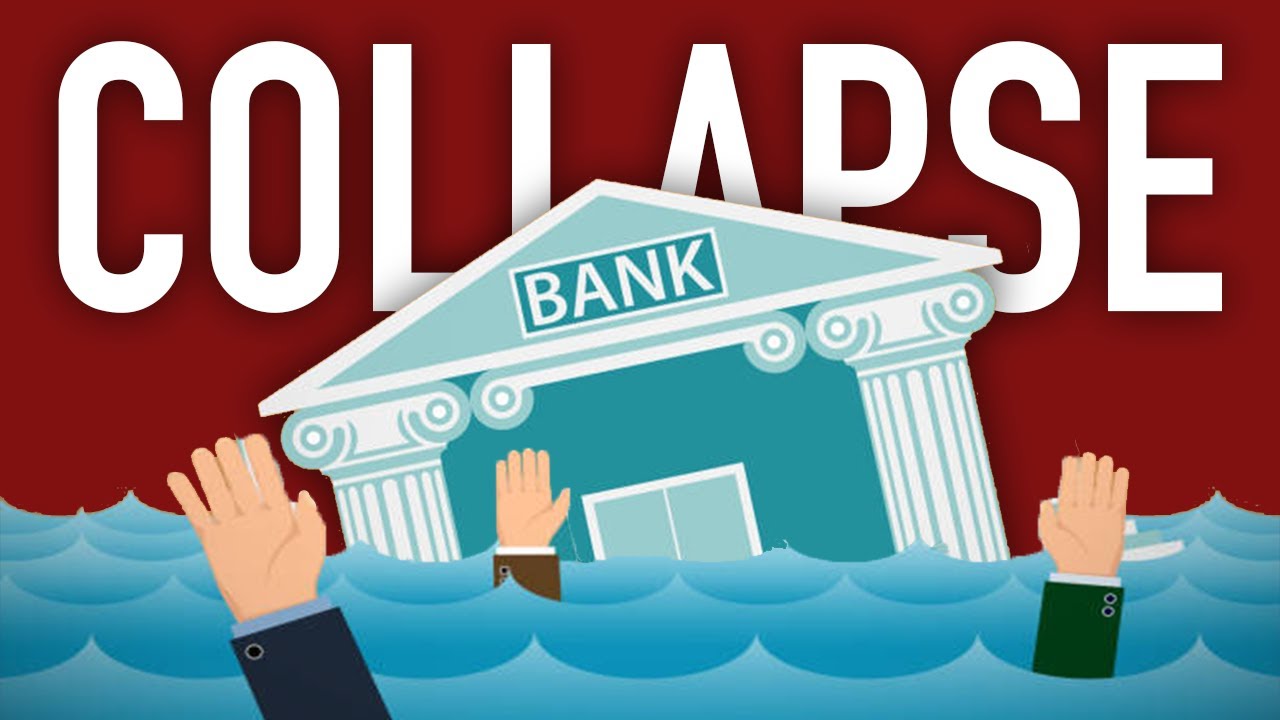
While the 2008 crisis is often remembered for the failure of traditional banks, it was, in essence, a run on the shadow banking system. The trigger was the collapse of the U.S. housing bubble, but the mechanism of destruction was the implosion of complex, shadow-funded securities.
A. The Securitization Chain: The process began with mortgage lenders (non-banks) issuing subprime loans. These loans were bundled into Mortgage-Backed Securities (MBS) and Collateralized Debt Obligations (CDOs) by investment banks and SPVs.
B. The Role of Credit Ratings and Insurance: These complex products were given top-tier, AAA ratings by agencies, making them appear safe. Credit insurers like AIG sold vast quantities of credit default swaps, providing a false sense of security to investors worldwide.
C. The Funding Mechanism: The entire edifice was funded in the repo market. Financial institutions used MBS and CDOs as collateral to obtain the short-term cash needed to fund their operations and holdings.
D. The Run Begins: When homeowners began defaulting, the value of MBS and CDOs plummeted. This had an immediate, catastrophic effect in the repo market. Lenders, seeing the collateral’s value collapse, initiated a “run” by demanding more collateral (a margin call) or refusing to roll over loans entirely. This was the digital, 21st-century equivalent of a bank run.
E. The Domino Effect: This funding freeze forced institutions to sell assets into a falling market to raise cash, driving prices down further. Money Market Funds, heavily invested in the short-term debt of these failing institutions, “broke the buck,” most famously the Reserve Primary Fund. The contagion spread instantly, freezing credit markets globally and necessitating unprecedented government bailouts. The collapse was not of a single bank, but of the entire parallel financial system that had grown to rival the traditional one in size.
D. The Unfinished Battle: Post-2008 Reforms and Persistent Vulnerabilities
In the aftermath of 2008, regulators implemented sweeping reforms like the Dodd-Frank Act and Basel III, which targeted some aspects of shadow banking. Banks faced stricter capital and liquidity rules (e.g., the Liquidity Coverage Ratio). However, in a classic case of the “waterbed effect,” where pushing down risk in one area causes it to bulge in another, regulatory pressure has often simply displaced risk deeper into the shadows.
A. The Shift to Non-Banks: As traditional banks retreated from certain lending activities due to new regulations, non-bank lenders private credit funds, business development companies (BDCs), and fintech lenders rushed in. The share of corporate lending held by non-banks has surged, creating a new, less-regulated credit channel.
B. The Rise of Private Credit and Direct Lending: This is a massive, growing segment where hedge funds and private debt funds lend directly to companies, often with looser covenants and higher leverage. This market is opaque and largely untested in a severe recession.
C. The Lingering Dangers in the Bond and Loan Funds: The proliferation of open-end bond funds and loan mutual funds presents a modern liquidity mismatch. These funds offer daily redemptions to investors but invest in illiquid corporate bonds and loans. A wave of redemptions could force these funds to sell illiquid assets, potentially freezing the corporate debt market.
D. The Persistent Fragility of the Repo Market: The repo market remains a critical vulnerability, as demonstrated by the “repo market blow-up” of September 2019. A confluence of factors led to a sudden, severe shortage of cash, causing short-term borrowing rates to spike to 10%. The Federal Reserve was forced to intervene with massive injections of liquidity, revealing that the plumbing of the financial system was far from secure.
E. The Next Domino: Identifying the Triggers for a Future Collapse
The global financial system is arguably more leveraged and interconnected than it was in 2007. The next shadow banking collapse could be triggered by several potential catalysts.
A. A Sharp Rise in Interest Rates: The decade of “free money” is over. Aggressive monetary tightening by central banks exposes highly leveraged entities. Companies that borrowed heavily from shadow lenders during the low-rate era now face soaring debt servicing costs, leading to a spike in defaults.
B. A Liquidity Shock in Corporate Debt: The corporate bond market has ballooned in size, with a significant portion rated BBB, just one notch above junk. A downturn could trigger mass downgrades to junk status (“fallen angels”), forcing many institutional investors to sell and causing a liquidity crisis in the very funds that promise daily redemptions.
C. The Cryptocurrency and Digital Asset Nexus: The emerging ecosystem of decentralized finance (DeFi), crypto lending platforms, and stablecoins represents a new, hyper-fast frontier of shadow banking. The collapse of Terra/Luna and FTX in 2022 demonstrated the same classic vulnerabilities: leverage, opacity, maturity mismatch, and a devastating run dynamic, all operating with even less oversight.
D. Geopolitical Events or a Deep Global Recession: A major geopolitical crisis or a sustained global recession would test the entire financial architecture. The shadow banking system, with its reliance on confidence and continuous market access, is particularly vulnerable to a sharp, system-wide reassessment of risk.
F. Fortifying the Financial Foundation: Potential Solutions and Mitigations
Preventing the next collapse requires a paradigm shift in regulation—from a focus on individual institutions to a holistic view of the entire financial ecosystem.
A. Enhanced Transparency and Data Collection: Regulators must have the authority and tools to map the entire network of shadow banking interconnections. This means collecting data on repo transactions, securities lending, and the derivative exposures of all major non-bank entities.
B. Extending the Regulatory Perimeter: Prudential standards, such as liquidity buffers and leverage limits, must be carefully applied to systemically important non-banks. Entities that perform core banking functions should face bank-like oversight.
C. Addressing Structural Liquidity Mismatches: For open-end funds that hold illiquid assets, regulators should consider tools like swing pricing (adjusting the fund’s price to protect remaining investors during heavy redemptions) or even imposing minimum holding periods for a portion of the fund’s shares.
D. Reforming the Credit Rating Agencies: The conflict of interest inherent in the “issuer-pays” model must be addressed to ensure ratings are robust and independent, not just a rubber stamp for complex products.
E. Strengthening Central Bank Liquidity Tools: The 2019 repo crisis showed the need for a permanent, standing repo facility. Central banks must be prepared to act as a “lender of last resort” to a broader range of systemically critical non-bank entities during periods of acute stress, albeit with stringent conditions to avoid moral hazard.
 Conclusion: An Unseen Danger Demanding a Clear-Eyed Vigilance
The shadow banking system is a powerful engine of modern capitalism, providing essential credit and fostering innovation. Yet, its history is punctuated by catastrophic failures that reveal a system built on a fragile foundation of confidence and short-term funding. Its collapse is not a specter of the past but a clear and present danger. The 2008 crisis was a dramatic warning, and the subsequent regulatory response, while meaningful, has been incomplete. Risk has migrated, not vanished.
As the system evolves with the rise of private credit, the fragility of bond funds, and the wild frontier of crypto the potential triggers for the next crisis multiply. The challenge for policymakers, investors, and the public is to shed light on these shadows, to understand the intricate web of dependencies, and to build a financial system that is not only efficient but also resilient. The stability of the global economy depends on our ability to prevent the next hidden collapse from becoming an all-too-visible catastrophe.