
The digital landscape has fundamentally reshaped how we access information, and the world of finance is no exception. Over the past decade, a new breed of online celebrities has emerged from the depths of social media platforms like TikTok, Instagram, YouTube, and Twitter: the “finfluencer.” Short for financial influencer, these individuals have built massive followings by demystifying investing, offering stock tips, and promoting a seemingly accessible path to wealth. However, this rapid rise has occurred in a largely unregulated gray area, creating a breeding ground for potential misconduct. In response, the U.S. Securities and Exchange Commission (SEC) has launched a significant and widespread crackdown, sending shockwaves through the online financial community. This article provides a deep dive into the reasons behind this regulatory surge, the specific violations finfluencers are being charged with, the profound implications for both creators and investors, and a forward-looking analysis of what the future holds for financial content online.
A. The Meteoric Rise of the Finfluencer Phenomenon
To understand the SEC’s crackdown, one must first appreciate the scale and nature of the finfluencer ecosystem. Their appeal is undeniable. Unlike traditional financial advisors who can seem inaccessible or intimidating, finfluencers often present themselves as relatable peers.
A. The Allure of Accessibility: Finfluencers leverage short-form video, engaging graphics, and colloquial language to break down complex financial concepts. They make topics like options trading, cryptocurrency, and meme stocks feel approachable to a generation that might find Wall Street jargon off-putting.
B. The Power of Community: Followers often feel like they are part of an exclusive club or movement. Comment sections and dedicated Discord servers foster a sense of belonging, where investment decisions are validated by a community of like-minded individuals, sometimes leading to an “echo chamber” effect.
C. The Illusion of Democratization: Finfluencers have been portrayed as figures who are “democratizing finance,” taking power away from large, traditional institutions and giving it to the retail investor. While there is a kernel of truth to this, it has also created an environment where regulatory safeguards are often viewed as unnecessary obstacles rather than essential protections.
This potent combination of factors has allowed finfluencers to amass tremendous influence, with some top creators boasting audiences larger than the readership of major financial newspapers. However, with great influence comes great responsibility, and a significant regulatory scrutiny.
B. The Core of the Controversy: Key SEC Violations by Finfluencers
The SEC’s mission is to protect investors, maintain fair, orderly, and efficient markets, and facilitate capital formation. The activities of many finfluencers have directly threatened these core objectives. The crackdown is not aimed at legitimate financial education but at specific, illegal practices. The primary charges levied by the SEC can be broken down into several critical categories.
A. The Pervasive Problem of Undisclosed Paid Promotion (Section 17(b) Violations)
This is one of the most common violations cited by the SEC. The law requires that anyone promoting a security must fully disclose the nature, source, and amount of compensation they receive. Many finfluencers have ignored this fundamental rule.
-
How it Works: A company, a startup looking to pump its stock price, or even a larger entity will pay a finfluencer either in cash, free stock, or a percentage of the profits to create positive content about a specific stock or cryptocurrency.
-
The Deception: The influencer then creates a post, video, or tweet enthusiastically recommending the asset to their followers without disclosing the paid arrangement. Their audience, trusting the influencer’s “authentic” opinion, invests their money, driving up the price. The influencer and the paying party profit, while the followers are left holding an asset that was artificially inflated.
-
SEC’s Stance: The SEC considers this a form of fraud. It deprives investors of the information needed to assess the credibility and motivation behind a recommendation. It transforms what appears to be independent advice into a paid advertisement.
B. The Digital Age Scourge: Pump-and-Dump Schemes
While pump-and-dump schemes are as old as the markets themselves, social media has supercharged their scale and speed. Finfluencers are often the central accelerants in these modern-day schemes.
-
The Mechanics of a Modern Pump-and-Dump:
-
Accumulation: The orchestrators (and sometimes the collaborating finfluencers) quietly accumulate a large position in a low-priced, thinly-traded stock, often a “penny stock.”
-
The Pump: The finfluencers launch a coordinated promotional campaign across multiple platforms, using hyperbolic language, false claims about “imminent” news, or fabricated technical analysis to create a sense of urgency and excitement (e.g., “This stock is about to explode!” or “Don’t miss the next Bitcoin!”).
-
The Frenzy: Their massive follower base buys the stock en masse, causing a rapid and dramatic price increase the “pump.”
-
The Dump: At the peak of the price surge, the original schemers and the finfluencers sell their entire holdings for a massive profit.
-
The Collapse: The selling pressure causes the stock price to crash, often to levels lower than where it started, leaving the late-arriving followers with significant financial losses.
-
C. Operating as Unregistered Investment Advisors
The Investment Advisers Act of 1940 requires that anyone engaged in the business of providing advice about securities for compensation must register with the SEC or a state regulator. Many finfluencers cross this line.
-
The Gray Area: There is a distinction between providing general financial education and providing specific investment advice. A video explaining what an ETF is constitutes education. A post saying, “I am buying XYZ stock tomorrow at market open, and you should too,” can be construed as specific advice.
-
The Compensation Element: Compensation isn’t always direct cash. It can include affiliate commissions from brokerage sign-ups, payment from a platform based on viewership metrics (e.g., YouTube ad revenue on a video recommending specific stocks), or the receipt of free securities. When this type of compensation is tied to specific investment recommendations, the finfluencer may be legally required to register.
-
The Implication: Registration brings with it a fiduciary duty to act in the client’s best interest, stringent compliance requirements, and regular SEC examinations. Unregistered finfluencers operate without these critical investor protections.
D. The Unlicensed Sale of Securities
Some finfluencers have gone beyond mere promotion and have actively participated in the unregistered offer and sale of securities, such as in Initial Coin Offerings (ICOs) or offerings for startups.
-
The Scenario: A company developing a new cryptocurrency token hires finfluencers to market its “presale” or ICO to their audience. The influencers often receive a large allocation of tokens at a deep discount.
-
The Violation: If the token is deemed a security (which many are, under the Howey Test), then its offer and sale must either be registered with the SEC or qualify for an exemption. The finfluencers themselves may be acting as unlicensed brokers by engaging in the transaction and receiving transaction-based compensation.
-
The Risk to Investors: These offerings are often highly speculative and lack the disclosures of a registered public offering, making them incredibly risky for the retail investors who are swayed by their trusted influencer.

C. Case Studies: The SEC Enforcement Actions in Action
The theoretical violations become starkly clear when examining real-world cases the SEC has pursued.
A. The “MeetKevin” Settlement: One of the most prominent cases involved YouTube influencer Kevin Paffrath (“MeetKevin”). The SEC charged him for failing to disclose payments he received from a financial company whose stock he was promoting on his channel, which had over 1.8 million subscribers. He agreed to pay over $75,000 in disgorgement, prejudgment interest, and a civil penalty. This case was a clear warning that even large, seemingly legitimate creators were not above the law regarding disclosure.
B. The “Coinbase Insider Trading” Scheme Involving Finfluencers: In a landmark case, the SEC charged a former Coinbase manager and two others with insider trading. The scheme involved the manager tipping off his brother and a friend with non-public information about which crypto assets were going to be listed on Coinbase. The friend, in turn, leveraged his status as a popular cryptocurrency finfluencer (with a large Twitter following) to promote the assets just before the official listing, profiting alongside his associates. This case highlighted the dangerous intersection of insider information and influencer marketing.
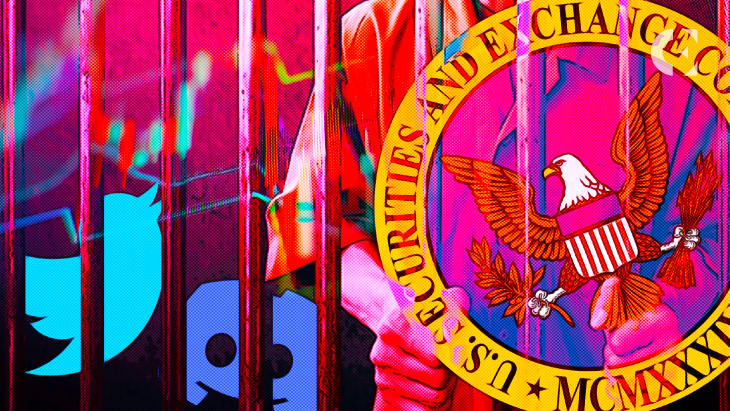
C. The “8 Figure Trading” Podcast Case: The SEC charged the founders of the “8 Figure Trading” podcast and their associated platform with running a fraudulent pump-and-dump scheme. They allegedly used their online influence to recruit students for a trading course, then used a private Discord channel to orchestrate coordinated buying of select stocks, which they would then sell into the artificially created price pump. This case is a textbook example of how a community built around a finfluencer can be weaponized for illicit gain.
D. The Ripple Effects: Implications for Investors, Creators, and the Market
The SEC’s crackdown is not an isolated event; it has profound and far-reaching consequences for all stakeholders in the financial ecosystem.
A. For the Everyday Investor: A Call for Critical Thinking
This era should serve as a wake-up call for anyone taking financial advice from social media.
-
Cultivate Healthy Skepticism: If an opportunity seems too good to be true, it almost certainly is. Be deeply suspicious of promises of guaranteed returns or pressure to “act now.”
-
Demand Transparency: Before acting on any tip, ask: “What is this person’s motive?” Look for clear and conspicuous disclosures like “#ad,” “#paid,” or “#sponsored.” If they aren’t there, assume the recommendation is incentivized.
-
Diversify Your Information Sources: Do not rely on a single finfluencer for your financial education. Cross-reference information with established, reputable financial news outlets and official company filings (like 10-Ks and 10-Qs).
-
Understand Your Risk Tolerance: Investments promoted on social media are often highly volatile and speculative. Never invest money you cannot afford to lose.
B. For Financial Influencers: The Dawn of a New Era of Accountability
The “wild west” days for finfluencers are over. To build a sustainable and legal career, creators must adapt.
-
Prioritize Disclosure, Always: Any material connection to a promoted security must be clearly and repeatedly disclosed. When in doubt, over-disclose.
-
Understand the Law: Ignorance is not a defense. Finfluencers must educate themselves on the basics of securities law, particularly Section 17(b) and the Investment Advisers Act.
-
Shift from “Advice” to “Education”: The safest path forward is to focus on teaching principles and strategies rather than making specific, actionable recommendations. Empower your audience with knowledge instead of handing them ticker symbols.
-
Seek Legal Counsel: Any finfluencer with a substantial following who discusses investments should consult with a securities lawyer to understand their legal obligations and mitigate risk.
C. For the Broader Financial Market: Restoring Integrity
A market thrives on trust. The unchecked actions of fraudulent finfluencers erode that trust.
-
Leveling the Playing Field: The crackdown helps ensure that all market participants are playing by the same rules, preventing those with large online followings from having an unfair and illegal advantage.
-
Reducing Systemic Manipulation: By prosecuting pump-and-dumps and coordinated manipulation, the SEC helps reduce the artificial volatility that can harm legitimate companies and the investors who believe in them.
-
Promoting Long-Term Stability: When investors feel protected from fraud, they are more likely to participate in the markets confidently, which benefits capital formation and economic growth in the long run.
E. Navigating the New Landscape: A Guide to Identifying Red Flags
As the regulatory environment evolves, so must the savvy of the investor. Here are critical red flags to watch for.
A. The Language of Hype and Urgency: Be wary of phrases like “to the moon,” “can’t lose,” “once-in-a-lifetime opportunity,” “guaranteed profits,” or “this is not financial advice” followed by very specific financial advice. Legitimate professionals speak in terms of risk and probability, not certainty.
B. Vague or Missing Disclosures: If an influencer is not crystal clear about how they are being compensated, it is a major warning sign. Look for standardized disclosure language and be suspicious of its absence.
C. Pushing obscure or Penny Stocks: While not illegal in itself, the promotion of low-priced, low-volume stocks is a classic hallmark of pump-and-dump schemes because they are easier to manipulate.
D. The “Cult of Personality”: Be cautious of influencers who build a following based primarily on their charismatic personality and lavish lifestyle rather than on demonstrable, transparent investment expertise and a track record of sound financial principles.
E. Pressure to Join Exclusive or Paid Groups: While many legitimate educators offer courses, be suspicious if the primary value proposition is “secret” stock picks in a private, paid chat group. This is a common setup for orchestrated manipulation.
 F. The Future of Financial Content: Predictions and Trends
The SEC crackdown is a defining moment that will shape the future of financial social media.
A. The Professionalization of Finfluencers: The bar for entry will rise. Successful finfluencers will likely be those with formal credentials (CFA, CFP, etc.) or those who partner with registered investment advisors and legal teams to ensure compliance.
B. Platform-Led Policing: Social media platforms like TikTok, YouTube, and Instagram will face increasing pressure to proactively monitor and label financial content. We may see the implementation of automated disclosure prompts or partnerships with regulatory bodies to flag problematic accounts.
C. The Rise of “Compliant-First” Content: A new genre of financial content will emerge that is built from the ground up with regulatory compliance as a core feature, not an afterthought. This content will be more educational, principle-based, and transparent.
D. Increased Collaboration Between Regulators and Tech: We can expect more formal agreements and task forces between the SEC, the FTC, and major tech companies to share information and streamline enforcement against cross-platform fraud.
Conclusion: A Necessary Correction for a Healthier Market
The SEC’s sweeping crackdown on finfluencers is not an attack on financial innovation or the democratization of investing. Rather, it is a necessary and overdue correction aimed at preserving the integrity of the markets and protecting vulnerable investors. It marks the end of an era of impunity and the beginning of a new chapter defined by accountability, transparency, and responsibility. For investors, it is a crucial lesson in the importance of due diligence. For creators, it is a clear mandate to operate within the bounds of the law. And for the market as a whole, it is a reaffirmation that the rules of fair play apply to everyone, regardless of whether they are on Wall Street or TikTok. The future of finance is undoubtedly digital, but for it to be sustainable, it must also be ethical and well-regulated.