
The landscape of financial transactions is undergoing a seismic shift. The familiar ritual of swiping a card, inserting a chip, or even typing a PIN is being steadily supplanted by the futuristic ease of a fingerprint scan, a glance at a smartphone, or the sound of one’s voice. This is the era of biometric payments, a technology that leverages our unique physiological and behavioral characteristics our biometrics to authorize purchases. From Apple Pay’s Face ID and Touch ID to Amazon’s palm-scanning technology in Whole Foods, biometric authentication is rapidly moving from a sci-fi trope to a mainstream payment method, promising unparalleled convenience and a seemingly more secure alternative to passwords and plastic cards.
The allure is undeniable. You are your password. There’s nothing to forget, lose, or physically steal. Your face, your fingerprint, and your heartbeat are intrinsically tied to you. This perception of ironclad security is a powerful driver of adoption. However, beneath the glossy surface of this technological revolution lies a complex and often underestimated web of security risks and ethical dilemmas. While biometric payments can enhance security in specific contexts, they are far from being an impenetrable fortress. This article delves deep into the hidden vulnerabilities of biometric payment systems, exploring the technical, procedural, and human factors that threaten user security and privacy. Furthermore, it provides a comprehensive roadmap of mitigation strategies for both consumers and financial institutions, ensuring that as we step into this new age of commerce, we do so with our eyes wide open to the potential pitfalls.
A. Understanding the Core Components of a Biometric Payment System
To fully grasp the security risks, one must first understand the fundamental architecture of a biometric payment system. It is not a single piece of technology but an interconnected ecosystem.
A. Biometric Sensor: This is the hardware that captures the raw biometric data. Examples include:
* Fingerprint Scanners: Optical, capacitive, or ultrasonic sensors found on smartphones and payment terminals.
* Facial Recognition Cameras: 2D cameras for basic recognition or more advanced 3D depth-sensing systems like Apple’s TrueDepth camera.
* Voice Recognition Microphones: Standard microphones that capture voiceprints.
* Iris Scanners: High-resolution cameras that capture the unique patterns of the iris.
* Vein Pattern Scanners: Infrared sensors that map the unique vein patterns in a finger or palm.
B. Feature Extraction Software: The raw data from the sensor is massive and noisy. This software processes the data to isolate and digitize the distinct, unique features known as a “template.” For a fingerprint, this would be the minutiae points (ridge endings and bifurcations); for a face, it would be the distances between key landmarks.
C. Biometric Template Database: This is where the extracted template is stored. The storage method is a critical security decision, which we will explore in detail later. It can be stored locally on a user’s device (on-device) or centrally on a remote server (on-server).
D. Matching Algorithm: At the point of sale, when a user presents their biometric, a new template is created and compared against the stored reference template. The algorithm calculates a similarity score; if it exceeds a predefined threshold, authentication is successful, and the payment is authorized.
E. Payment Processing Gateway: Once biometric authentication is confirmed, the system triggers the traditional payment processing network, communicating with banks and card networks to complete the transaction.
B. The Inherent and Pervasive Security Risks of Biometric Payments
The very characteristics that make biometrics so convenient also create unique and profound security challenges that differ fundamentally from traditional password-based systems.
A. The Irrevocability and Permanence Problem: This is the single most significant risk. If your password is compromised, you can change it. If your credit card number is stolen, the issuer can cancel it and send a new one. You cannot change your fingerprint, your face, or your iris. Once a biometric template is successfully stolen and replicated, that biometric identifier is potentially compromised for life. An attacker could use it to impersonate you across any system that relies on that same biometric, leading to catastrophic and irreversible identity theft.
B. Biometric Data Storage Vulnerabilities: The security of the entire system hinges on how and where the biometric template is stored.
* Centralized Server Storage: When templates are stored in a central database (on-server), they become a high-value target for hackers. A successful breach could lead to the theft of millions of immutable biometric identities. The 2019 breach of a biometric database containing over a million fingerprints and facial recognition data is a chilling precedent.
* Local Device Storage: Storing the template locally on a secure element within a user’s smartphone (e.g., Apple’s Secure Enclave) is generally considered more secure. The data never leaves the device, and the matching process happens locally. However, this method is not foolproof. If the device itself is lost, stolen, or compromised by sophisticated malware, the local template could be extracted.
C. Sophisticated Spoofing and Presentation Attacks: Attackers are adept at creating forged biometric samples to trick sensors.
* Fingerprint Spoofing: High-resolution photographs of fingerprints left on glass surfaces can be used to create dummy fingerprints using materials like gelatin or silicone.
* Facial Recognition Spoofing: 2D systems can be fooled by high-quality photographs or screen recordings. Even 3D systems have been bypassed using sophisticated 3D-printed masks or deepfake video technology in real-time.
* Voice Replication: Advances in AI have made it possible to create convincing voice clones from just a few minutes of audio sample, potentially tricking voice-activated payment systems.
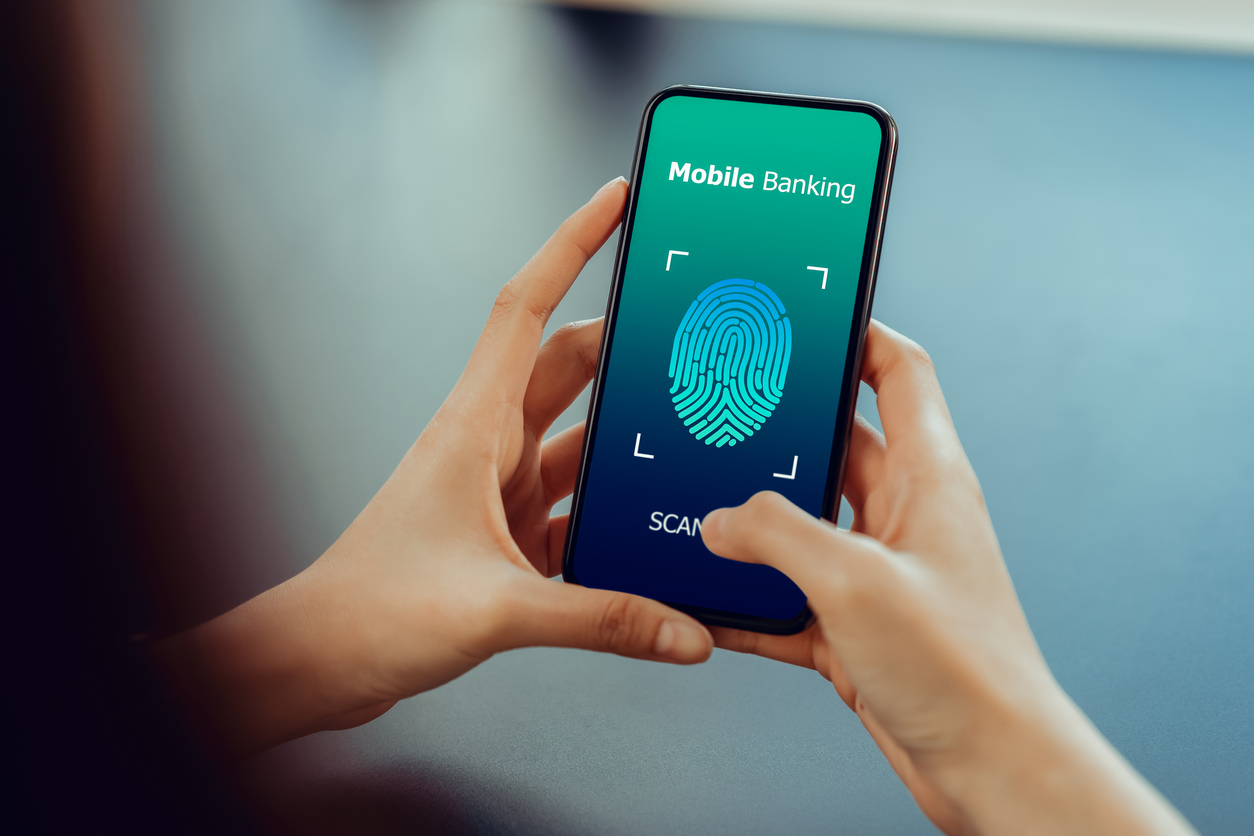
D. The Threat of Biometric Data Interception: During the transmission phase when data is sent from the sensor to the processing unit or from the device to a servern it is vulnerable to “man-in-the-middle” attacks. If the communication channel is not encrypted with the highest standards, an attacker could intercept and steal the raw biometric data or the template in transit.
E. Privacy Infringement and Mass Surveillance: Biometric payment systems generate an enormous amount of highly personal data. This creates a significant privacy risk. Corporations and governments could potentially link your payment history with your physical presence, location, and even your emotional state (through facial expression analysis). This data can be used to build incredibly detailed profiles for targeted advertising without your explicit consent or, more worryingly, for mass surveillance and social control.
F. The False Acceptance and False Rejection Dilemma: Biometric systems are not perfect. They operate on probabilities.
* False Acceptance Rate (FAR): The system incorrectly authenticates an impostor. A high FAR is a direct security failure, allowing unauthorized access to your funds.
* False Rejection Rate (FRR): The system incorrectly rejects the legitimate owner. While not a direct security breach, a high FRR leads to user frustration, “biometric friction,” and abandonment of the technology. Factors like a cut on a finger, a change in lighting for facial recognition, or a common cold affecting one’s voice can trigger false rejections.
G. The Legal and Regulatory Gray Area: The legal framework for biometric data is still in its infancy and varies wildly across jurisdictions. Laws like the Illinois Biometric Information Privacy Act (BIPA) in the U.S. and the GDPR in Europe set some precedents, but globally, the rules are fragmented. Questions about who owns your biometric data, how long it can be retained, and what constitutes informed consent are still being debated in courtrooms, leaving consumers in a vulnerable position.
H. Coercion and Physical Duress: Unlike a PIN, which can be withheld under threat, a biometric trait can be taken by force. An attacker can physically force your finger onto a sensor or hold your phone up to your face. Some systems are beginning to implement “duress codes,” but this is not yet a standard feature.
C. Advanced Technical Vulnerabilities: Beyond the Obvious
Beyond the broad risks, there are more nuanced technical threats that security researchers are only beginning to understand.
A. Template Reversibility and Reconstruction: A common claim is that stored biometric templates are encrypted and cannot be reverse-engineered to recreate the original biometric image. While the process is difficult, it is not always impossible. Researchers have demonstrated successful attacks where a fingerprint image was reconstructed from a standard template, proving that the “one-way hash” concept for biometrics is not as robust as it is for passwords.
B. Cross-Matching and Function Creep: The biometric data you provide for payment authentication could potentially be used for other purposes you never consented to a concept known as “function creep.” Your “payment face” could be cross-referenced with a government database for law enforcement or a social media platform for ad targeting, creating a unified tracking identifier that follows you everywhere.
C. Side-Channel Attacks: These attacks do not target the biometric data directly but exploit weaknesses in the system’s implementation. By analyzing power consumption, electromagnetic leaks, or timing information during the authentication process, an attacker could deduce sensitive information about the stored template or the matching algorithm.
D. Building a Fortress: Mitigation Strategies and Best Practices
Despite these daunting risks, the adoption of biometric payments is inevitable. The goal, therefore, is not to reject the technology but to build robust, multi-layered defenses that mitigate the risks effectively. This requires a concerted effort from technology providers, financial institutions, regulators, and consumers.
A. For Technology Providers and Financial Institutions:
-
Prioritize Liveness Detection: This is the most critical defense against spoofing. Advanced systems must incorporate multi-modal liveness detection that can distinguish a live person from a fake artifact. Techniques include:
-
Texture Analysis: Detecting the fine skin texture and pores of a real finger.
-
Pulse and Blood Flow Detection: Using photoplethysmography (PPG) to sense a heartbeat.
-
Micro-expressions and Eye Blinking: Analyzing involuntary facial movements.
-
Challenge-Response: Asking the user to perform a random action like smiling or turning their head.
-
-
Implement Decentralized, On-Device Matching: The industry standard must shift decisively towards storing and processing biometric templates exclusively within a secure, hardware-isolated element on the user’s own device (e.g., a smartphone’s Secure Enclave or Trusted Execution Environment). The template should never be transmitted to or stored on a central server.
-
Adopt Strong, Standardized Encryption: All biometric data, whether at rest or in transit, must be encrypted using state-of-the-art algorithms (e.g., AES-256). The encryption keys must be managed with the highest level of security.
-
Utilize Cancelable and Transformable Biometrics: This is a promising technological solution to the irrevocability problem. Before storage, the biometric template is intentionally distorted using a non-invertible transformation function. The matching is done in this transformed domain. If the database is compromised, the stolen transformed template is useless, and a new transformation can be applied, effectively “canceling” the old biometric and issuing a new one.
-
Promote Multi-Factor Authentication (MFA): Biometrics should be used as one factor in a multi-layered security approach, not as a standalone solution. The most secure systems would combine:
-
Something you are: A fingerprint (Biometric).
-
Something you have: Your specific smartphone (Device).
-
Something you know: A PIN or passphrase (Knowledge).
-
-
Ensure Transparency and User Consent: Institutions must be transparent about how biometric data is collected, used, stored, and shared. Consent should be explicit, informed, and easy to withdraw.
B. For Consumers and End-Users:
-
Understand the Privacy Policy: Before enrolling in any biometric payment system, take the time to read the privacy policy. Know where your data is stored and how it will be used.
-
Use Biometrics on Personal, Secured Devices: Only enable biometric payments on your personal smartphone or device that is protected by a strong passcode and has the latest security updates installed. Avoid using public or shared devices for biometric authentication.
-
Enable Multi-Factor Authentication Wherever Possible: Always opt for an additional layer of security, such as a PIN or password, even if the system only requires a biometric.
-
Register Multiple Biometrics: If your system allows it, register more than one fingerprint or use both face and voice ID. This provides a backup if one biometric is temporarily unavailable and diversifies your risk.
-
Be Aware of Your Surroundings: Be cautious when using biometric authentication in public. Shield the sensor from prying eyes and cameras to prevent your biometric data from being captured surreptitiously.
-
Monitor Your Financial Statements Regularly: As with any payment method, regularly review your bank and credit card statements for any unauthorized transactions. Report discrepancies immediately.
Conclusion: A Future of Cautious Optimism
Biometric payments represent a double-edged sword, offering a tantalizing glimpse into a frictionless future while wielding the potential for severe and lasting harm if implemented carelessly. The security risks are real, complex, and evolving. The myth of the un-hackable biometric must be dispelled and replaced with a clear-eyed understanding of its vulnerabilities.
The path forward requires a balanced approach. We must embrace the convenience and potential security benefits of biometrics without succumbing to technological naivety. By demanding robust liveness detection, decentralized storage, multi-factor authentication, and strong regulatory oversight from providers, and by practicing vigilant digital hygiene as consumers, we can harness the power of this technology. The goal is to create a biometric payment ecosystem that is not only convenient but also trustworthy, resilient, and respectful of the fundamental human right to privacy and security. The future of payments is biological, but its security must be built on unshakeable digital foundations.