The financial trading landscape has undergone a seismic shift. What was once a solitary endeavor dominated by institutional players has transformed into a highly social, community-driven experience. At the heart of this transformation lies the social trading platform a digital arena where millions of retail investors gather to share ideas, replicate strategies, and collectively move markets. Today, a fierce battle is unfolding among these platforms. The weapons? Network effects, exclusive information, and the trust of a new generation of investors. This is the story of how a niche feature evolved into the next major battleground in finance.
The Evolution of a Financial Revolution
To understand the current war, one must first trace the origins of social trading. The concept began with copy trading, an innovation pioneered by platforms like eToro in the late 2000s. The premise was revolutionary in its simplicity: instead of spending years learning the intricacies of financial markets, users could automatically replicate the trades of successful investors with a single click. This feature, initially introduced through eToro’s “OpenBook” in 2010, made investing accessible to the masses in an unprecedented way. eToro’s user base surged, and it soon branded itself as the world’s first social investing platform.
The success of copy trading laid the groundwork for a broader social trading ecosystem. As retail investing became more democratized, online communities where traders discussed ideas flourished. Platforms like Reddit’s r/WallStreetBets and Stocktwits demonstrated the immense power of collective sentiment, culminating in the legendary GameStop short squeeze of 2021. Analysis showed a strong correlation between Reddit activity, trading volume, and price action, proving that attention itself could translate into financial value.
However, a critical problem emerged: in these open forums, anyone could claim to hold a position without any way to verify it. This lack of transparency created fertile ground for misinformation and manipulation. The market demanded a solution, and a new generation of platforms rose to meet it. Apps like AfterHour allowed users to link their social profiles directly to their brokerage accounts, ensuring that every posted trade was provable. This gave followers real-time, verified signals and marked a significant evolution from simple copy trading to a more transparent, interactive social experience.
The Competitive Landscape: A Battle for Attention
The modern social trading arena is defined by intense competition. As trading fees race toward zero across the industry, the traditional revenue model of charging commissions is rapidly eroding. In this new environment, competitive advantage no longer comes from trade execution, which has become a commoditized service. Instead, the battle is now fought over network effects, trader relationships, and proprietary information layers.
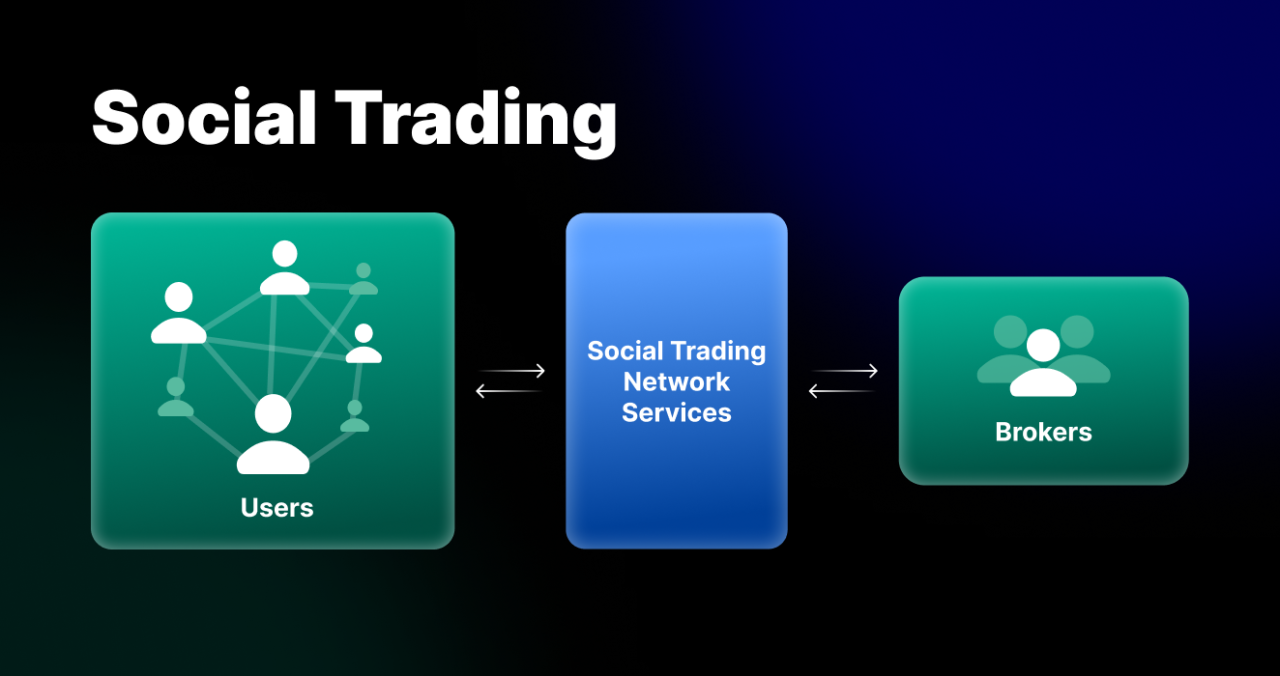
Platforms are forming a distinct growth loop: they attract renowned traders and their followers, traders build their reputation through public trading calls, and followers amplify the market impact by following these trades. This, in turn, increases both the trader’s visibility and the platform’s user base. Public trade calls can even lead to a self-fulfilling prophecy, as followers piling into a position move the price in the trader’s favor.
Let us examine the key players engaged in this escalating war:
A. eToro: The pioneer and current market leader. With over 35 million users, eToro has built its empire on its “CopyTrader” functionality and a strong social feed. It cultivates what researchers call an “investor ontology,” focusing on building personal trust and a longer-term profit orientation. Its “Popular Investor Program,” which grew from about 3,500 members to over 5,000 in early 2026, is central to its engagement strategy.
B. Robinhood: The disruptor that forced the industry to embrace commission-free trading is now making a significant push into social trading. After years of regulatory caution, Robinhood launched “Robinhood Social,” a feature that allows users to manually replicate the trades of prominent investors. This move represents a striking about-face for the company, which had previously ditched gamified features like digital confetti ahead of its IPO to avoid regulatory scrutiny. Robinhood’s approach differs from eToro’s; it emphasizes transparency and community discussion over full automation, positioning itself for active traders.
C. Binance: The world’s largest cryptocurrency exchange has integrated social trading features, but with a distinctly different focus. While eToro caters to investors, Binance fosters a “trader ontology.” Its social aspects are designed around attention and information generation. With a staggering 266 million users, Binance represents the trading-oriented end of the spectrum, where content creation and fast-paced trading are the primary draws.
D. ZuluTrade and Other Innovators: Platforms like ZuluTrade have carved out a niche by focusing on signal variety and filtering, allowing users to connect with a vast network of signal providers from over 190 countries. Meanwhile, new entrants like Dub are positioning themselves as educationally focused alternatives, offering risk scores and portfolio stability metrics in an attempt to differentiate from what some critics describe as “gambling for the broader population”.
E. Emerging Crypto-Native Platforms: The crypto world is also seeing its own social trading boom. BitMEX launched a “Copy Wars” campaign with a 100,000 USDT prize pool to celebrate its new copy trading feature, while decentralized platforms like dYdX acquired Pocket Protector to integrate social trading functionality and community-driven features.
The Regulatory Tightrope

The explosive growth of social trading has not gone unnoticed by regulators. The International Organization of Securities Commissions (IOSCO) has identified a growing intersection between finfluencer activities and imitative trading strategies, warning that these innovations can “blur the lines” between regulated financial advice and the provision of generic financial information.
The risks are significant. Automated copy trading strategies can lead investors to adopt approaches that do not match their financial situations, particularly regarding risk tolerance and loss-absorption capacity. IOSCO has highlighted that these strategies often involve short-term, higher-risk trading practices using complex and volatile financial products, such as foreign exchange and crypto assets. This can expose retail investors to significant risks, including losses from leveraged products and erosion of returns due to high transaction fees from frequent trading.
In response, IOSCO has published a series of reports outlining best practices for firms offering imitative trading strategies. These include:
A. Overseeing the conduct of lead traders and establishing procedures for their selection and removal.
B. Assessing and addressing conflicts of interest that may arise between traders and their followers.
C. Monitoring marketing activities to ensure compliance with disclosure and conduct standards.
D. Demanding more disclosure from industry firms that utilize influencers and providing ongoing education for both investors and finfluencers.
The regulatory environment remains fragmented. Most regulators classify copy trading as likely falling “within the provision of investment advice and/or individual portfolio management,” allowing them to apply existing rules. However, enforcement is complicated by the fact that many finfluencers are not registered investment professionals.
The Hidden Risks of Social Trading
Despite its promise of democratized finance, social trading carries substantial risks that every participant must understand. Data from a DWF Ventures report reveals a sobering statistic: out of approximately 292,000 wallets analyzed on one platform over three months, only 6.16% were profitable based on realized gains. This suggests that the vast majority of users on these platforms are losing money.
The problems are multifaceted. Followers often lack independent investment logic, making them susceptible to herd mentality. Conflicts of interest can arise between traders and followers, especially when traders are incentivized by platforms to generate high volumes of activity. Furthermore, even if a platform can verify public holdings, traders may still have undisclosed positions in other wallets, making it impossible to completely eliminate information asymmetry.
The flywheel growth effect itself is a double-edged sword. While it can create rapid platform growth, it also introduces significant risk. When followers pile into a trade, they move the price in the lead trader’s favor. This self-fulfilling prophecy can create the illusion of skill where none exists, setting the stage for a painful unwinding when the momentum reverses.
The Future: Where Does the War Go from Here?
The social trading platform war shows no signs of cooling down. Market analysts project the global social trading platform market to grow from approximately $2.6 billion in 2025 to nearly $4.9 billion by 2034, representing a compound annual growth rate of nearly 8%. The broader social trading market is projected to reach an even more remarkable $11.7 billion by 2035.
Looking ahead, several key trends are poised to shape the next phase of the conflict:
A. The Convergence of Crypto and Traditional Markets: The social trading ecosystems of cryptocurrency and traditional stock markets are expected to further integrate. Platforms that can successfully bridge these worlds and capture both trader and user attention across asset classes are likely to generate the strongest network effects.
B. The Rise of AI-Driven Recommendations: Artificial intelligence is set to transform the social trading experience. AI-driven trade recommendations and enhanced analytics will become a key differentiator, helping users filter the noise and identify higher-quality signals from the vast amount of data generated on these platforms.
C. The “Discovery and Discussion” Layer: Social networking is becoming the underlying infrastructure of finance. The new battlefield is to seize talent in the “discovery and discussion layer” of financial trading. Platforms that can establish a unique information layer, aggregate high-quality traders, and create genuine network effects will gain a competitive edge.
D. The Integration of Live Streaming and Prediction Markets: Industry insiders predict the emergence of entirely new product forms that combine live streaming with event prediction and trading. This convergence could further blur the line between trading and entertainment, creating unprecedented opportunities and risks.
Navigating the Social Trading Frontier
The war among social trading platforms is more than a battle for market share; it is a fundamental reimagining of how retail investors interact with financial markets. Platforms like eToro, Robinhood, and Binance are not just competing for users; they are competing to define the very nature of the investing experience.
For retail investors, the opportunities are undeniable. Social trading offers access to strategies that were once the exclusive domain of professionals, a supportive community, and the potential for enhanced returns. But the risks are equally real. The data on user profitability is stark, and the regulatory landscape remains a patchwork of approaches that leaves significant gaps.
The ultimate winners in this war will likely be platforms that can successfully balance innovation with responsibility. They will be the ones that not only provide powerful social tools but also prioritize user education, implement robust risk management frameworks, and foster transparent communities where trust can flourish. As social networking becomes the underlying infrastructure of finance, the platforms that can create genuine value for their users and not just engagement for engagement’s sake will be the ones that stand the test of time. The social trading platform war is heating up, and the stakes could not be higher.