

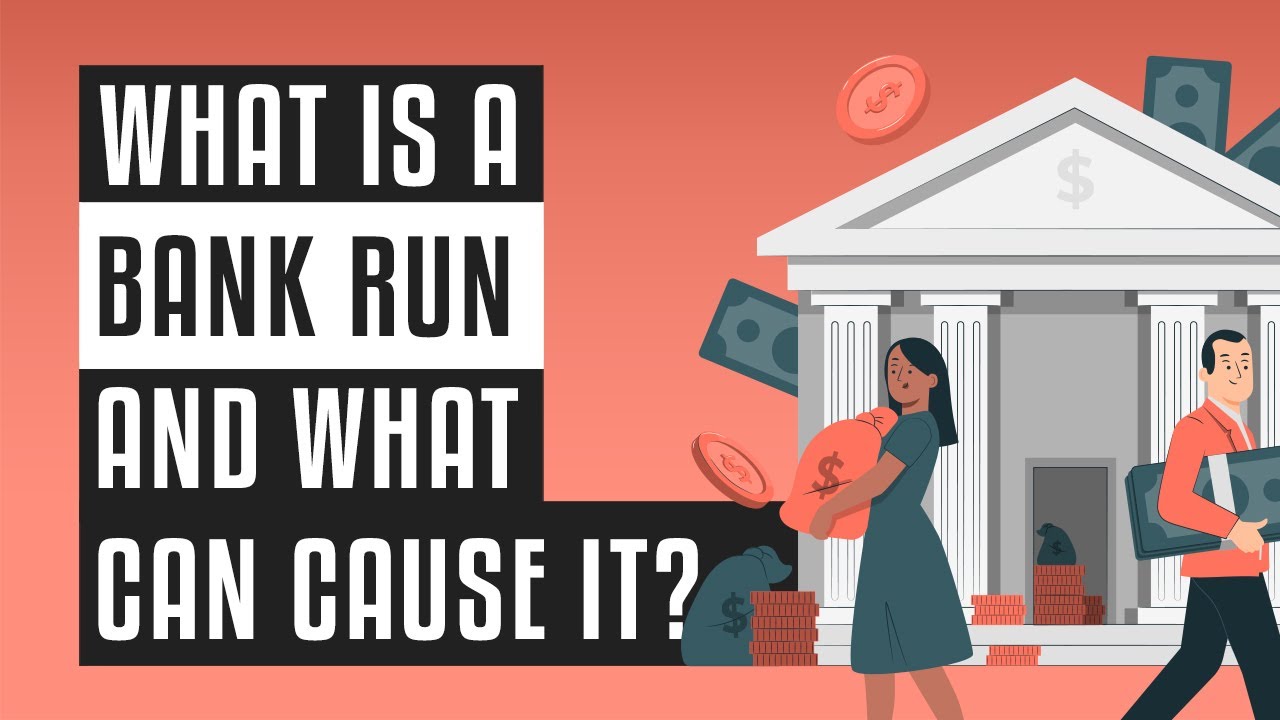
In the intricate and often intangible world of finance, few phenomena are as viscerally dramatic and economically destructive as a bank run. It is a scenario where rationality on an individual level collides with catastrophic irrationality on a collective scale, creating a self-fulfilling prophecy of institutional collapse. While the imagery of the Great Depression with long lines of anxious depositors clamoring at locked bank doors feels like a relic of a bygone era, the digital-age bank runs of the 21st century, such as those witnessed with Silicon Valley Bank (SVB) and Signature Bank in 2023, have proven that the underlying vulnerability remains. This comprehensive analysis delves deep into the anatomy of a bank run, dissecting its fundamental causes, unraveling its immediate and long-term consequences, and exploring the sophisticated mechanisms modern economies employ to prevent financial contagion.
A. Deconstructing the Core Concept: What Exactly is a Bank Run?
At its most fundamental level, a bank run occurs when a large number of a bank’s customers withdraw their deposits simultaneously over concerns about the bank’s solvency. The critical paradox at the heart of every bank run is rooted in the very nature of fractional-reserve banking.
Fractional-Reserve Banking: The Engine and the Achilles’ Heel
Modern banks do not simply store your money in a vault, assigning a specific pile of cash to each depositor. Instead, they operate on a fractional-reserve system. This means they are only required to hold a small fraction of their total deposit liabilities as reserves (cash or highly liquid assets). The remainder is deployed to generate income, primarily through:
A. Loans: Mortgages, business loans, auto loans, and personal lines of credit.
B. Investments: Purchasing government bonds, mortgage-backed securities, and other financial instruments.
This system is the lifeblood of economic growth. It allows capital to be recycled, funding new businesses, homes, and innovations. However, it also creates a fundamental maturity and liquidity mismatch. Bank deposits are typically demand liabilities, meaning they are payable to the depositor immediately upon request. In contrast, the loans and investments made by the bank are illiquid assets with long-term maturities; a 30-year mortgage cannot be instantly called in to cover a wave of withdrawals.
Under normal conditions, this mismatch is manageable. The daily inflow of deposits from some customers generally covers the outflow from others. It is a stable equilibrium. A bank run shatters this equilibrium. It is a violent rush for the exit, where the collective demand for liquidity far exceeds the bank’s readily available cash reserves, pushing the institution toward inevitable failure.
B. The Domino Effect: The Sequential Stages of a Full-Blown Bank Run
A bank run is not a single event but a cascading process. Understanding its sequential stages reveals why it is so difficult to stop once the momentum begins.
Stage 1: The Triggering Spark
Every bank run begins with a catalyst a specific event or piece of information that erodes public confidence. Historical and modern triggers include:
-
Rumors or Negative News: Reports of significant losses, a major loan default, or fraud investigations.
-
Macroeconomic Shocks: A sudden recession, a sharp rise in interest rates, or a collapse in a specific asset class (e.g., the subprime mortgage market in 2008).
-
A High-Profile Failure: The collapse of another, even unrelated, bank can create a general atmosphere of panic and suspicion toward the entire banking sector.
-
Social Media and Digital Amplification: In the case of SVB, concerns spread like wildfire through private WhatsApp groups and Twitter, enabling a digital bank run where withdrawals were initiated with a few clicks, far faster than any physical run.
Stage 2: The Rush of Rational Withdrawals
A small group of depositors, typically the most well-informed or risk-averse, acts first upon hearing the bad news. From their individual perspective, this is a perfectly rational act: if there is even a slight chance the bank might fail, securing one’s funds is the logical course of action. The early withdrawers get their money out in full.
Stage 3: The Panic and the Herd Mentality
The sight of others withdrawing money whether physically at a branch or digitally through news of large fund transfers triggers a powerful psychological response: herd mentality. The actions of the few now signal to the many that there is a real danger. Fear and uncertainty override logic. Depositors who had no initial concern now feel compelled to join the rush, not wanting to be the last in line. The problem ceases to be about the bank’s actual financial health and becomes a problem of perception and panic.
Stage 4: The Liquidity Crisis and Asset Fire Sales
To meet the unprecedented demand for cash, the bank rapidly exhausts its minimal cash reserves. It is then forced to raise liquidity by selling its other assets. In a panic, this often means selling long-term bonds and loans at a significant loss, especially in a rising interest rate environment. These “fire sales” crystalize losses that might have remained theoretical if the assets were held to maturity.
Stage 5: The Solvency Crisis and Insolvency
The losses from the fire sales directly erode the bank’s capital base the buffer that absorbs losses. If the losses are severe enough, they can wipe out the bank’s capital, rendering it technically insolvent (its liabilities exceed its assets). At this point, even if the panic stopped, the bank is already dead. The self-fulfilling prophecy is complete: the fear of insolvency has caused the actions that create actual insolvency.
Stage 6: Contagion and Systemic Risk
The fallout rarely stops at one bank. Panic is contagious. The failure of one institution can lead depositors at other, even healthy, banks to question their safety. This can spark a systemic crisis, where the entire financial system seizes up, threatening the broader economy. The 2008 global financial crisis is the quintessential example of contagion spiraling out of control.
C. The Modern Arsenal: Key Defenses Against Bank Runs
In the century since the Great Depression, governments and central banks have developed a robust toolkit designed specifically to break the vicious cycle of a bank run and maintain public confidence.
A. Deposit Insurance: The Bedrock of Confidence
The most powerful psychological weapon against bank runs is deposit insurance. In the United States, this is administered by the Federal Deposit Insurance Corporation (FDIC). The FDIC guarantees deposits up to a certain limit ($250,000 per depositor, per insured bank, for each account ownership category). This guarantee fundamentally changes the depositor’s calculation. Knowing that their funds are protected by the full faith and credit of the U.S. government, most individuals have little incentive to participate in a run, even if they hear negative news. The establishment of the FDIC in 1933 was the single most important factor in ending the epidemic of bank runs in the United States.
B. The Lender of Last Resort: The Central Bank’s Role
Central banks, like the Federal Reserve, act as a “lender of last resort” to commercial banks facing temporary liquidity shortfalls. Through mechanisms like the discount window, banks can borrow funds directly from the central bank, using their illiquid but sound assets (like government bonds) as collateral. This provides a vital lifeline, allowing a bank to meet withdrawal demands without having to engage in destructive fire sales. The mere existence of this backstop is often enough to calm markets.
C. Capital and Reserve Requirements: Regulatory Buffers
Following the 2008 crisis, international regulatory frameworks like Basel III were significantly strengthened. Banks are now required to maintain higher levels of high-quality capital to absorb losses and meet stricter liquidity coverage ratios (LCR). The LCR mandates that banks hold a sufficient stock of unencumbered high-quality liquid assets (HQLA) to survive a significant 30-day stress scenario. These regulations force banks to be more resilient by design.
D. Regulatory Supervision and Stress Testing
Banks are subject to intense and continuous oversight by regulatory bodies. Regular examinations assess their risk management practices, asset quality, and overall health. Furthermore, large banks must undergo annual stress tests, which simulate their performance under severely adverse economic conditions (e.g., deep recession, high unemployment, sharp market declines). Banks that fail these tests can be restricted from paying dividends or buying back stock until they rectify their capital deficiencies.
D. Case Studies in Panic: From the Great Depression to the Digital Age
The Great Depression (1929-1933): The Classic Run
The bank runs of the Great Depression were the textbook example. A wave of bank failures swept the nation, with over 9,000 banks closing their doors. There was no FDIC, so when a bank failed, depositors lost everything. The iconic images of despondent citizens outside closed banks led to a catastrophic loss of confidence and a hoarding of cash, which starved the economy of credit and deepened the Depression, ultimately prompting Franklin D. Roosevelt to declare a national “bank holiday” in 1933.
The 2008 Financial Crisis: The Silent Run on Shadow Banking
While traditional retail bank runs were less common due to deposit insurance, the 2008 crisis featured a modern equivalent: a run on the “shadow banking” system. Institutions like investment bank Bear Stearns and insurance giant AIG relied not on insured deposits but on short-term repurchase agreements (repo) and commercial paper. When confidence evaporated, these overnight funding markets froze, creating a devastating liquidity crisis that toppled these giants and demonstrated that the run dynamic had simply evolved to target new, uninsured parts of the financial system.
The 2023 Silicon Valley Bank Collapse: The Digital-Age Run
The failure of SVB is a masterclass in a 21st-century bank run. The triggers were clear: the bank held a massive portfolio of long-term U.S. Treasuries, which lost substantial market value as the Fed raised interest rates. Simultaneously, its depositor base was highly concentrated in the tech startup community. When the bank announced it had sold a bunch of securities at a loss to raise cash, it sent a shockwave through its connected clientele. The panic unfolded at digital speed. Over $42 billion was withdrawn in a single day, primarily via digital transfers, before regulators had to step in and seize the bank. It was a stark reminder that in the digital era, a bank run can occur in hours, not days.
E. The Ripple Effects: Consequences of a Bank Run
The impact of a bank run extends far beyond the failed institution itself.
-
For Depositors: Uninsured depositors (those with balances over the FDIC limit) can suffer significant losses. While regulators have recently shown a tendency to protect all depositors in systemic cases (as with SVB), this is not guaranteed.
-
For the Bank and its Employees: The bank faces collapse, liquidation, or forced sale. Employees lose their jobs, and shareholders are typically wiped out.
-
For the Local and National Economy: Credit contraction is the most severe consequence. A failed bank can no longer lend. Surviving banks, fearing further runs, often tighten lending standards dramatically. This “credit crunch” starves businesses of capital for expansion and hiring, and prevents individuals from getting mortgages and car loans, potentially triggering or worsening a recession.
-
For Broader Financial Stability: As seen with contagion, a single bank run can undermine trust in the entire financial system, increasing the cost of borrowing for all institutions and freezing capital markets.
F. A Practical Guide for the Individual Depositor
In an era of digital panic, how can an individual protect themselves and act rationally?
A. Verify Your Deposit Insurance Coverage: The first and most crucial step is to ensure your deposits are within the FDIC insurance limits ($250,000). For larger sums, funds can be spread across multiple banks or different ownership categories (e.g., individual, joint, trust accounts) at the same bank to stay fully insured.
B. Assess the Bank’s Health (For Sophisticated Investors): While the average depositor is protected, those with larger, uninsured balances can look at a bank’s public financial statements, paying attention to its capital ratios, the composition of its asset portfolio, and its reliance on uninsured deposits.
C. Avoid Reactionary Panic: Do not make financial decisions based on social media frenzy or sensationalist headlines. Recall the existence of deposit insurance and the lender-of-last-resort function. A reactionary withdrawal from a fundamentally sound bank based on rumor contributes to the very problem you fear.
D. Diversify Your Assets: A sound financial plan does not hold all assets in bank deposits. A diversified portfolio including investments, retirement accounts, and other assets reduces reliance on any single institution.
Conclusion: A Perpetual Vigilance
The bank run is a timeless phenomenon, a stark reminder of the fragile psychology that underpins our financial system. While the defenses built over the last century deposit insurance, central bank backing, and robust regulation have made traditional runs rare, they have not made them obsolete. Instead, the nature of the run has evolved, leveraging digital tools to achieve unprecedented speed and scale. The truth behind bank runs is that they are ultimately a crisis of confidence. Therefore, the most critical defense remains the perpetual vigilance of regulators, the prudent management by bankers, and the informed calm of the public, all working in concert to maintain the trust that is the true currency of the financial world.