

The global cross-border payments industry has entered uncharted territory. In 2025, cross-border payment flows surged to an estimated $190 trillion, generating a revenue pool exceeding $290 billion figures that represent not merely incremental growth but a fundamental transformation of how money moves across borders. From record-breaking transaction volumes in China’s renminbi clearing system to the explosive growth of stablecoin-based settlements, the infrastructure underpinning international commerce is being rebuilt in real time.
This article examines the forces driving these record-breaking numbers, the technological innovations accelerating the shift, the regional dynamics reshaping market share, and the persistent challenges that threaten to slow progress. Whether you are a corporate treasurer, a fintech strategist, or a policy analyst, understanding this inflection point is essential for navigating the next decade of global payments.
The Numbers Behind the Record: Scale and Velocity
A. Total Market Volume Hits Unprecedented Heights
According to McKinsey’s Global Payments Map, cross-border payment volumes reached approximately $190 trillion in 2025, with revenues exceeding $290 billion. J.P. Morgan’s 2026 outlook projects that cross-border payments will grow from $194 trillion in 2024 to an extraordinary $320 trillion by 2032 a trajectory that underscores the sheer scale of globalization’s financial plumbing.
The market size of cross-border payments services, measured differently from total flow volumes, was valued at $371.59 billion in 2025 and is projected to reach $397.37 billion in 2026, eventually climbing to $727.74 billion by 2034 at a compound annual growth rate of 7.90%.
B. B2B Dominance and the Correspondent Banking Disruption
Business-to-business transactions remain the backbone of cross-border flows, accounting for 97% of total volumes and 53% of revenues in 2025. Global B2B cross-border payment volumes are on track to reach $173 trillion in 2026 alone. However, this dominance is being challenged by a new generation of payment rails that offer near-real-time settlement, greater transparency, and lower costs than traditional correspondent banking chains.
The financial stakes are enormous. Even a modest 1% margin compression across just 20% of B2B flows implies roughly $346 billion in annual revenue shifting away from legacy systems. Banks anchored in correspondent banking infrastructure face a stark choice: adapt by adopting new rails, or watch structural revenue erosion accelerate.
C. The Stablecoin Surge: From Experiment to Infrastructure
Perhaps the most dramatic development in cross-border payments is the emergence of stablecoins as a legitimate settlement layer. B2B stablecoin payments are estimated to reach approximately $390 billion in 2026, up from just $3 billion in 2022. While this still represents under 0.5% of the total $173 trillion B2B market, the growth trajectory is unmistakable.
BVNK, an enterprise-grade stablecoin payments platform, disclosed that its annualised stablecoin payment volume reached $30 billion in 2025, representing 2.3x year-on-year growth. Mastercard’s subsequent $1.8 billion acquisition of BVNK signals that stablecoin settlement rails are becoming permanent infrastructure rather than speculative experiments.
Technological Forces Reshaping Payment Rails
A. Real-Time Payment Networks and Instant Settlement
The global push toward instant payments has moved from aspiration to expectation. Clients increasingly demand that international transactions match the speed, transparency, and traceability of domestic payments—instant and available 24/7. Real-time payment networks, once confined to domestic markets, are now being interlinked across borders.
The Bank for International Settlements’ Project Rialto has demonstrated the technical feasibility of connecting non-tokenised payment systems with tokenised foreign exchange and settlement mechanisms. The proof of concept integrated retail cross-border payments using interlinked instant payment systems, automated FX schemes leveraging automated market makers, and tokenised central bank money as a safe settlement asset. This is not theoretical—the experiment successfully tested direct transactions between senders and receivers in different jurisdictions and currencies.
B. AI-Powered Routing and Intelligent Payment Orchestration
Artificial intelligence is transforming payment operations from reactive processing to predictive optimization. J.P. Morgan reports that human-AI collaboration can lift productivity and execution speed by up to 50%, while AI-powered data management improves decision speed and accuracy by up to 25%. AI-powered routing engines are now analyzing liquidity positions, FX rates, regulatory requirements, and counterparty risk in real time to select optimal payment pathways.
C. ISO 20022 and the Data-Rich Payment Standard
The migration to ISO 20022 messaging standards is accelerating, enabling richer data to accompany every transaction. This structured data facilitates greater automation, improved compliance screening, and enhanced end-to-end tracking. J.P. Morgan adopted ISO 20022 as its standard payments protocol in 2023, embedding the universal format into daily operations to support seamless connectivity and data accuracy. The standard is becoming the connective tissue that allows disparate payment systems to interoperate efficiently.
D. Blockchain and Distributed Ledger Settlement
While blockchain-based settlement remains a small fraction of total flows, its institutional adoption is accelerating. J.P. Morgan’s 2026 Payments Outlook reveals that 60% of Fortune 500 companies plan blockchain-based payment initiatives. Stablecoin-native platforms such as BVNK use blockchain-based rails to move value outside conventional fiat clearing entirely, while regulated fiat-native platforms like Airwallex build proprietary networks of local accounts and prefunded balances to achieve similar settlement speed and cost advantages within the conventional banking system.
Regional Dynamics: Asia Pacific Leads, China Sets Records
A. China’s CIPS System Breaks Historic Milestones
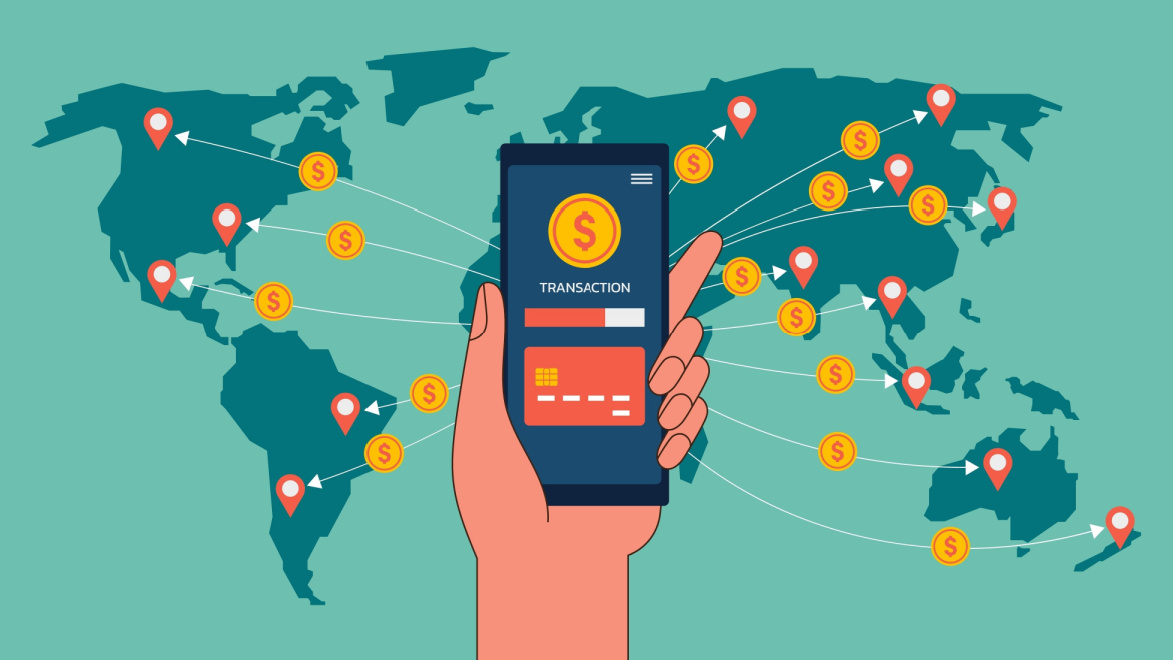
The Chinese yuan’s cross-border payment infrastructure has achieved remarkable records. The Cross-Border Interbank Payment System (CIPS) processed a single-day transaction volume exceeding RMB 1.22 trillion (approximately $168 billion) with nearly 42,000 transactions a historic high. In March 2026, CIPS average daily transaction volume exceeded RMB 920 billion ($133.5 billion), rising 20% year-on-year, while transaction counts increased 9% to approximately 36,000 daily.
Cross-border renminbi settlement reached approximately RMB 22.2 trillion in the second quarter of 2026, growing 25.7% year-on-year. In the first half of 2026, banks handled cross-border receipts and payments totaling $9.2 trillion on behalf of clients a 21% year-on-year increase and a record high for the same period. The yuan’s share of cross-border payment and receipt transactions reached 52.9%, up 1.3 percentage points from the full-year 2025 level.
B. mBridge: The Multilateral CBDC Bridge
The mBridge project, a collaboration between the Bank for International Settlements and multiple central banks including the People’s Bank of China, has crossed a significant threshold. By the end of June 2026, cumulative transaction volumes via mBridge exceeded RMB 600 billion. In June 2026 alone, the Shenzhen branch of the Bank of China executed a cross-border outward remittance of RMB 11.3 billion via mBridge. This multilateral platform represents the first operational example of multiple central bank digital currencies being used for real cross-border settlement at scale.
C. Asia Pacific Market Leadership
Asia Pacific dominated the global cross-border payment market with a 46.30% share in 2025, generating $172.12 billion in revenue and projected to reach $185.71 billion in 2026. The region’s dominance reflects both the concentration of global manufacturing and trade in Asia and the rapid adoption of digital payment solutions by businesses and consumers across the region.
The Regulatory Landscape: Progress and Persistent Frictions
A. G20 Roadmap: Milestones Achieved, Goals Unmet
The Financial Stability Board’s 2025 progress report on the G20 Roadmap for Enhancing Cross-Border Payments reveals a mixed picture. The majority of international policy work has been completed, including recommendations to level the playing field between bank and non-bank payment service providers, and standards to mitigate data-related frictions. The Financial Action Task Force also revised its Recommendation 16 on Payment Transparency to increase the safety and security of cross-border payments.
However, the FSB concedes that these policy initiatives “have not yet translated into the desired real-world gains for end-users.” It is unlikely that satisfactory improvements will be achieved in line with the 2027 Roadmap timetable. The three most commonly cited pain points remain slow speeds, lack of transparency, and high costs.
B. Data Frictions and Interoperability Challenges
Disparate policy and regulatory frameworks between jurisdictions remain among the chief obstacles to efficient cross-border payments. These contribute to compliance burdens across the payment chain, increase transaction times, and introduce uncertainties among stakeholders. Cross-border data flow restrictions, interoperability gaps, and inconsistent governance frameworks continue to fragment the global payment ecosystem.
C. AML/CFT Compliance: A Double-Edged Sword
Anti-money laundering and counter-financing of terrorism requirements, while essential, impose significant costs. Research from the Federal Reserve indicates that AML risks have larger cost effects in advanced economies with strong enforcement than in developing countries with weak enforcement, despite the former having lower underlying risks. This paradox suggests that the compliance burden falls disproportionately on jurisdictions with the strongest institutional safeguards.
Key Drivers Accelerating Cross-Border Payment Growth
A. Globalization 2.0 and Supply Chain Reconfiguration
The cross-border payments market is being driven by what analysts term “Globalization 2.0” a reconfiguration of global supply chains that, contrary to predictions of deglobalization, is actually increasing the complexity and volume of cross-border transactions. Maritime trade volumes increased 2.4% in 2023 to reach 12.29 billion tons, and this growth is being accompanied by a proliferation of smaller, more frequent cross-border transactions.
B. Digital Commerce and Mobile Payment Adoption
The explosion of global e-commerce and mobile-based payment adoption is fundamentally altering payment patterns. Digital cross-border payments alone are growing from $42.77 billion in 2025 to $49.62 billion in 2026 at a 16% compound annual growth rate nearly double the growth rate of the broader market. Small businesses, once priced out of efficient cross-border payment solutions, are becoming the new battleground for payment providers.
C. Evolving Consumer Expectations
Retail experiences are driving corporate expectations. Consumers who can send money instantly via mobile apps in their home countries increasingly demand the same convenience for international transactions. This “consumerization” of cross-border payments is forcing financial institutions to rethink legacy batch processing and multi-day settlement cycles.
Challenges Threatening the Record-Breaking Trajectory
A. The Commoditization Trap
McKinsey warns that the capabilities that once differentiated leading cross-border payment providers—security, speed, and cost—are steadily becoming table stakes. As traditional rails modernize and licensed providers proliferate, infrastructure-based competitive advantages will erode. Payments are becoming embedded features within broader financial and operational workflows rather than stand-alone products.
B. Take Rate Compression
Despite record volumes, revenue growth is lagging flow growth. Between 2022 and 2025, every segment of the retail cross-border payments market saw a drop in take rates, meaning the revenue pool has grown more slowly than flows. This compression threatens the business models of legacy providers that have relied on high-margin correspondent banking relationships.
C. Infrastructure Gaps in Developing Markets
While progress has been made in major corridors, significant variations persist across regions. The average global cost of remittances remains high, and the “first and last mile” of cross-border payments still depends on domestic payment rails that vary dramatically in quality and accessibility.
The Future Outlook: Toward a $320 Trillion Market
A. Projected Growth Trajectories
The cross-border payments market is projected to reach $263.41 billion in service revenue by 2030 at an 8.7% CAGR. Total flow volumes are expected to grow from $194 trillion in 2024 to $320 trillion by 2032. B2B flows are projected to represent 38% of total cross-border revenue by 2030 as real-time rails displace legacy ACH systems.
B. The Rise of Orchestration Platforms
Payment orchestration platforms that connect multiple rails traditional correspondent banking, real-time networks, stablecoin rails, and local clearing systems are emerging as the critical infrastructure layer. These platforms allow businesses to route transactions dynamically based on cost, speed, and reliability, optimizing liquidity across currencies and jurisdictions.
C. Convergence of Traditional and Digital Finance
The distinction between “traditional” and “digital” cross-border payments is blurring. Wise is exploring how customers can use cryptocurrencies on its platform not as a replacement for fiat infrastructure but as a tool to improve internal liquidity and payment flows for small and mid-sized merchants. Visa has launched a pilot program enabling businesses to make payments between stablecoin digital wallets directly, with 24/7 availability and near-instant fund reception. This convergence suggests a future where multiple settlement layers coexist and interoperate.
Conclusion: Records Are Just the Beginning
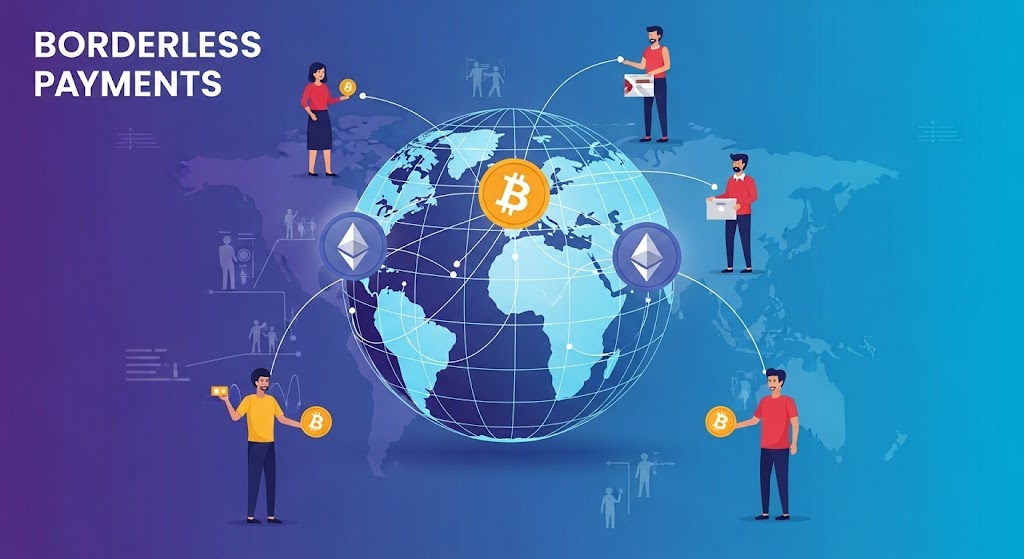
The record-breaking volumes in cross-border payments are not an endpoint but a waypoint on a much longer journey. The $190 trillion that crossed borders in 2025 will seem modest compared to the $320 trillion projected for 2032. The infrastructure being built today real-time payment linkages, tokenized settlement systems, AI-powered routing engines, and multilateral CBDC bridges will determine how efficiently that future volume moves.
For financial institutions, the imperative is clear: adopt new rails or risk becoming the correspondent banking of tomorrow. For businesses, the opportunity lies in leveraging the proliferation of payment options to optimize liquidity and reduce costs. For policymakers, the challenge is to accelerate implementation of the G20 Roadmap so that the benefits of faster, cheaper, and more transparent cross-border payments reach end-users at scale.