
The Dubai International Financial Centre (DIFC) has unveiled an ambitious plan to become the world’s first fully AI-native financial centre, a move that promises to fundamentally reshape how financial markets operate, how firms make decisions, and how regulators supervise activity across the globe. This initiative represents far more than a technological upgrade; it signals a structural redesign of an entire financial ecosystem around artificial intelligence at its very core. While financial centres worldwide are experimenting with AI at the margins, DIFC is positioning itself to integrate artificial intelligence into the core operating system of the Centre, embedding it across legal frameworks, business operations, talent development systems, ecosystem infrastructure, and even the district’s physical environment. The announcement, made in April 2026, has drawn significant attention from global financial stakeholders and positioned Dubai at the forefront of the AI-driven transformation of financial services.
The significance of this development cannot be overstated. The DIFC has laid the foundation for AI integration since 2023 by introducing a five-year AI strategy, establishing data governance policies, and incorporating AI as Regulation 10 as part of the DIFC Data Protection Law. The Centre has also introduced AI to support client compliance and relationship management. Now, with the announcement of the AI-Native programme, DIFC is uniquely positioned to become an AI role model for the finance industry globally. The Centre’s Native AI programme is projected to generate USD 3.5 billion (AED 12.9 billion) in economic benefits and create 25,000 new jobs, supporting advanced skills, human-AI collaboration, and next-generation financial services.
The Strategic Pillars of DIFC’s AI-Native Transformation
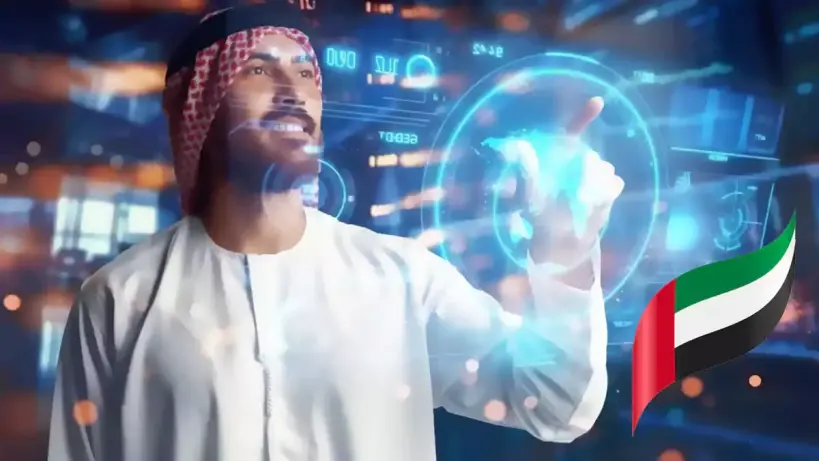
The DIFC’s strategy is organized around five interconnected pillars that define how this transformation will take shape. These pillars collectively create a comprehensive framework for embedding artificial intelligence into every facet of the financial centre’s operations.
A. Legal and Regulatory Frameworks
At the core of the plan is a new regulatory model that formally recognizes humans, AI agents, and robotics as participants in financial activity. This represents a paradigm shift in how financial regulation is conceptualized. No financial regulator has attempted this before. The DIFC is developing a legal framework that allows an AI agent to register as a recognized jurisdictional participant, on par with a bank or an asset manager not merely as a tool within a firm, but as an entity with formal standing in the system.
This includes frameworks for liability, dispute resolution, trusted data exchange, and real-time compliance systems. DIFC is also developing an AI Agent Registration System, cross-border regulatory recognition mechanisms, and governance tools that can be exported to other jurisdictions. The ambition is to position DIFC among the top global jurisdictions for AI-ready financial regulation.
Businesses can expect new ethics and governance frameworks to address AI use, including AI agents and robotics. The DIFC Authority has further promised to integrate physical AI, including robotics, autonomous mobility, and digital twins, with financial laws and regulation. These new frameworks will build upon the existing regulatory structure put in place by the DIFC Authority in 2023, which has since been supplemented with a robust accreditation and certification framework.
B. Business Operations and Enterprise Integration
Across DIFC institutions, including DIFCA, DFSA, DIFC Investments, and DIFC Courts, AI will be embedded into core enterprise workflows, compliance systems, and financial services delivery. This creates intelligent, automated, and trusted financial ecosystems where AI is not an add-on but an integral component of daily operations.
The Centre also plans to deploy a sovereign AI utility that will provide regulated firms with access to shared large language model infrastructure. The strategy incorporates agentic AI into financial regulation, alongside predictive risk modeling to enhance supervision and decision-making capabilities. Financial firms operating within the DIFC will have access to advanced AI tools to support their operations, enabling them to innovate more rapidly and efficiently within a regulated environment.
C. Talent Development and Human-AI Collaboration
DIFC’s talent strategy focuses on scaling human-AI collaboration through certifications, executive education, and technical training programs, supported by partnerships across academia and industry. The Centre aims to position itself as a global destination for AI-driven financial firms, with ambitions to compete with hubs such as Singapore and London.
The development of a skilled workforce capable of working alongside AI systems is critical to the success of this initiative. The Centre will be able to export AI governance software and trained talent to the Global South, creating a ripple effect that extends far beyond the DIFC’s physical boundaries. This approach ensures that the benefits of AI-native finance are not confined to a single jurisdiction but contribute to the broader global financial ecosystem.
D. Ecosystem Infrastructure and Innovation Platforms
At the ecosystem level, DIFC plans to expand its innovation platforms, venture-building capabilities, and global partnerships to support startups, research institutions, and financial firms operating at the intersection of AI and finance. The DIFC Innovation Hub, the region’s leading FinTech and innovation ecosystem, including the Dubai AI Campus, plays a central role in this expansion.
The Centre has an advantage in terms of speed to implementation due to being less constrained by legacy processes and regulation that some traditional financial centres experience. Additionally, operating at scale across all sectors, with clients having broad and deep offerings, ensures DIFC will become the AI benchmark for the world’s top global financial centres.
E. Physical Infrastructure and Smart District Development
Infrastructure development is a central component of the initiative. By 2030, DIFC aims to operate as a fully integrated smart district featuring AI-managed buildings, autonomous mobility systems, service robotics, and digital twin technologies. These systems are expected to improve operational efficiency, enable predictive maintenance, and reduce energy consumption across the district.
The financial centre will be the first to offer a full-stack AI Campus combining regulation, training, compute, and physical AI. This integration of physical and digital infrastructure represents a holistic approach to creating an AI-native environment that extends beyond software and regulation into the built environment itself.
Market Response and Adoption Trends
The market response to AI adoption within the DIFC has been remarkably positive. According to the Dubai Financial Services Authority (DFSA) AI survey released in November 2025, generative AI adoption has nearly tripled within the DIFC in the last 12 months, with 52% of firms now using AI up from 33% in 2024 representing a growth of 166%. The survey, conducted in June 2025, captured data from 661 Authorised Firms with an 88% participation rate, operating across Banking, Capital Markets, Wealth and Asset Management, and Fintech sectors.
Momentum continues to build, with 60% of firms expecting to increase their use of AI over the next 12 months, and 75% over the next three years, signaling that AI is on track to become a core operational component of financial services within the DIFC. However, the survey also revealed that while 60% of firms have some form of governance structure for AI, 21% still lack clear accountability or oversight mechanisms, even in cases where AI use is critical to business operations.
Firms are calling for greater regulatory clarity and guidance on AI governance, ethical use, and supervisory expectations, with harmonization of regulatory expectations across the UAE financial sector being a key request from firms. Justin Baldacchino, Managing Director of Supervision at the DFSA, emphasized the importance of balancing innovation with integrity, stating that governance frameworks must evolve in parallel with AI adoption, with clear accountability and oversight at every stage.
Dubai AI Festival: A Global Gathering of Innovation
DIFC’s commitment to advancing Dubai’s position as a global AI hub is highlighted through the Dubai AI Festival, which will convene more than 20,000 participants from over 100 countries. The Festival will be held at the Dubai World Trade Centre (DWTC) on 26 and 27 October 2026, with registrations now open at dubaiaifestival.com. This event serves as a platform for showcasing the latest developments in AI-driven financial services and facilitating knowledge exchange among global stakeholders.
The Festival represents a significant opportunity for businesses, innovators, and policymakers to engage with the cutting-edge developments shaping the future of finance. It also reinforces Dubai’s position as a global capital for the future of finance, attracting top talent, companies, and high-quality investments from around the world.
Leadership Endorsement and Strategic Alignment
The AI-Native initiative has received strong backing from Dubai’s leadership. His Highness Sheikh Hamdan bin Mohammed bin Rashid Al Maktoum, Crown Prince of Dubai, Deputy Prime Minister, Minister of Defence of the UAE, and Chairman of The Executive Council of Dubai, visited DIFC to review its strategic priorities and innovation ambitions.
His Highness stated that Dubai International Financial Centre represents a leading global model for building integrated economic and financial ecosystems driven by innovation, knowledge, and connectivity with the global economy. He emphasized that the sustained growth achieved by DIFC reflects growing international confidence in Dubai’s economy and its ability to create a world-class business environment that supports innovation and sustainable growth.
This initiative is closely aligned with the Dubai Economic Agenda D33, which aims to enhance Dubai’s global competitiveness by fostering a flexible, innovation-driven economy capable of attracting the world’s top talent, companies, and high-quality investments. Dubai’s recent rise to seventh place globally in the Global Financial Centres Index marked a defining milestone in its journey to becoming one of the world’s most influential financial hubs, with DIFC anchoring this achievement.
Expert Analysis and Industry Implications
Legal and industry experts have weighed in on the implications of DIFC’s AI-native strategy. Marie Chowdhry and Martin Hayward of Pinsent Masons in the UAE commented that the initiative goes beyond accommodating AI as a new technology risk. In their view, it is about designing a financial ecosystem in which AI is assumed to be part of how markets operate, firms make decisions, and regulators supervise activity.
This creates space for more sophisticated innovation, but it also requires firms to think much earlier and more rigorously about governance, accountability, and resilience. Hayward noted that the DIFC’s renewed commitment in this area would create new opportunities for innovation, efficiency, and scalable deployment of AI-enabled financial services within a regulated environment, urging organizations to start engaging early with these developments to ensure their AI strategies align with emerging regulatory and supervisory standards.
The announcement comes as a report by the World Alliance of International Financial Centres (WAIFC) points to the growing role of international financial centres as facilitators of responsible AI adoption. The report surveyed 12 international financial centres across Europe, the Middle East, Africa, and Asia including the Abu Dhabi Global Market and the DIFC and found that all of them were already integrating and adopting AI, particularly generative AI tools, through a coordinated mix of national AI strategies, regulatory guidance, and industry collaboration.
Competitive Positioning and Global Ambitions
DIFC’s AI-native strategy positions it to compete directly with established financial hubs such as Singapore and London. The Centre’s ability to operate at scale across all sectors, combined with its clients’ broad and deep offerings, gives it a unique advantage in becoming the AI benchmark for the world’s top global financial centres.
The initiative also aims to export AI governance frameworks, software, and talent to emerging markets, particularly across the Global South. This export-oriented approach extends the impact of DIFC’s transformation beyond its own jurisdiction, potentially influencing how financial centres in developing regions approach AI adoption and governance.
As the first AI-native financial centre, DIFC now ranks seventh in the Global Financial Centres Index and remains the Middle East, Africa, and South Asia (MEASA) region’s highest-ranked hub. This ranking reflects the growing international recognition of Dubai’s financial ecosystem and its capacity to drive innovation in the global financial services industry.
Challenges and Considerations
While the vision is ambitious, the path to becoming a fully AI-native financial centre is not without challenges. The DFSA survey highlighted that 21% of firms still lack clear accountability or oversight mechanisms for AI, even when AI use is critical to business operations. Addressing this governance gap will be essential to ensuring that AI adoption proceeds responsibly and sustainably.
Firms are also calling for greater regulatory clarity and harmonization of expectations across the UAE financial sector. The DFSA has emphasized that it will continue to follow a risk-based approach to regulation, ensuring that its oversight remains proportionate and responsive to emerging risks without imposing unnecessary burden on firms.
The integration of physical AI, including robotics and autonomous mobility, with financial laws and regulation presents novel legal and ethical questions that will require careful consideration. The development of frameworks for liability, dispute resolution, and trusted data exchange in contexts where AI agents may operate autonomously represents uncharted territory for financial regulators worldwide.
Conclusion: A Blueprint for the Future of Finance

The DIFC’s ambition to become the world’s first AI-native financial centre represents a defining step in Dubai’s ascent as a global capital for the future of finance. As artificial intelligence reshapes the international financial landscape, this initiative reinforces Dubai’s role in setting new standards for innovation, trust, and competitiveness.
The comprehensive approach spanning legal frameworks, business operations, talent development, ecosystem infrastructure, and physical urban fabric demonstrates a holistic vision for what an AI-native financial centre can be. By embedding AI at the foundational level rather than piloting it at the margins, DIFC is creating a model that other financial centres around the world will likely study and emulate.
With a projected economic contribution of USD 3.5 billion, the creation of 25,000 new jobs, and the potential to export AI governance frameworks and talent to the Global South, the initiative promises to deliver tangible benefits not only to Dubai but to the broader global financial ecosystem. As the Dubai AI Festival approaches in October 2026, the world will be watching to see how this ambitious vision unfolds and whether DIFC can truly become the first fully AI-native financial centre in the world.
The transformation of DIFC into an AI-native financial hub is more than a technological milestone; it is a statement of intent about the future of global finance. In an era where artificial intelligence is reshaping every aspect of economic life, DIFC’s bold initiative positions Dubai at the forefront of this transformation, setting a benchmark that will likely define the competitive landscape of international financial centres for years to come.