
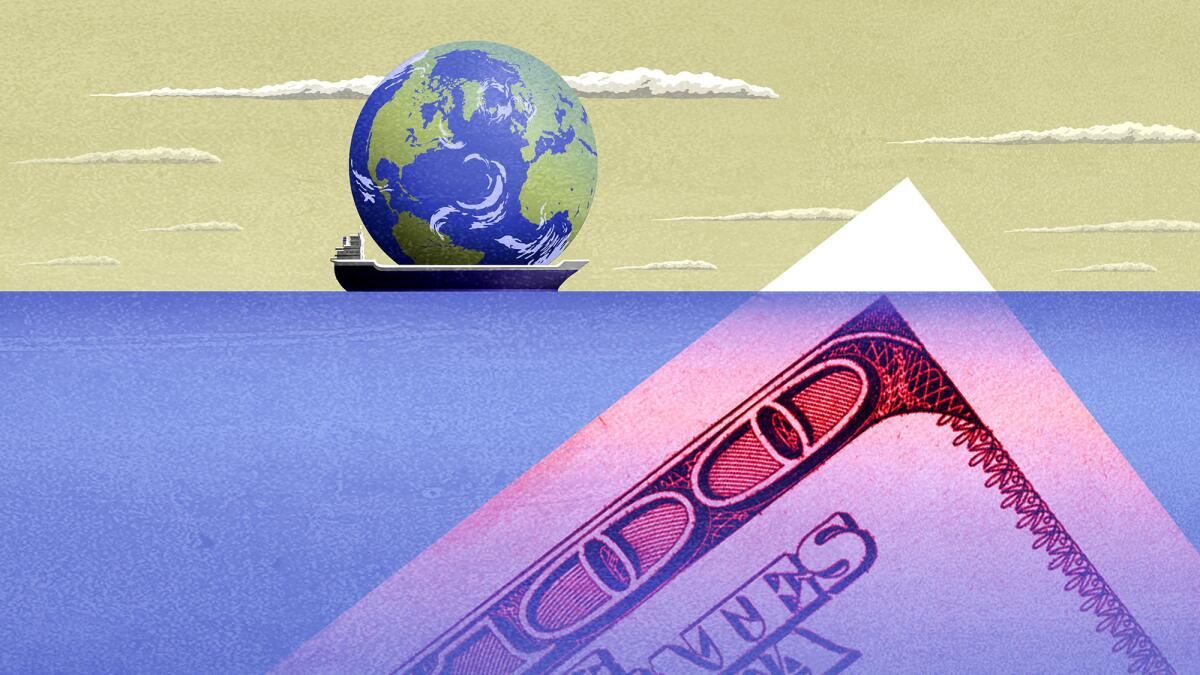
For over a decade, following the tumultuous 2008 Global Financial Crisis, the world’s economic landscape has been characterized by an era of historically low interest rates and unprecedented monetary stimulus. This environment, while fostering recovery and encouraging investment, has quietly nurtured a colossal and pervasive threat beneath the surface of market stability: a massive corporate debt bubble. Corporations worldwide gorged on cheap credit, leveraging their balance sheets to unprecedented levels to fund expansions, buy back shares, and pay dividends. For years, this was the engine of the bull market. However, as the global economic climate shifts, marked by rising inflation, aggressive interest rate hikes, and geopolitical instability, the foundations of this debt-fueled empire are cracking. The question is no longer if this bubble will burst, but when, how severely, and what the ensuing contagion will mean for the global economy. This in-depth analysis will dissect the anatomy of this bubble, explore the catalysts for its potential implosion, and outline the profound consequences for businesses, investors, and the average citizen.
A. The Anatomy of a Modern Debt Bubble: How We Got Here
To understand the impending crisis, one must first comprehend its origins and composition. The current corporate debt bubble is not a simple case of too much borrowing; it is a complex and systemically risky structure built over a long period of financial accommodation.
A. The Era of “Free Money” and Quantitative Easing (QE)
In response to the 2008 crisis, central banks, led by the U.S. Federal Reserve, slashed interest rates to near-zero levels. They also embarked on a policy known as Quantitative Easing (QE), which involved the large-scale purchase of government bonds and other financial assets to inject liquidity into the economy. This created a flood of cheap capital, pushing investors hungry for yield away from safe government bonds and into riskier corporate debt. Companies found it irresistibly inexpensive to issue bonds and take out loans, leading to a borrowing spree of historic proportions.
B. The Proliferation of Leveraged Buyouts (LBOs) and Private Equity
The low-interest-rate environment was a bonanza for private equity firms. They engaged in Leveraged Buyouts (LBOs), where they would acquire companies primarily using debt, loading the target company’s balance sheet with the obligation to repay. The goal was often to streamline the company and sell it later for a profit. This activity significantly increased the overall corporate debt burden, often leaving otherwise stable companies vulnerable to cash flow disruptions.
C. The Disturbing Rise of BBB-Rated and Junk Bonds
A critical and dangerous shift occurred in the quality of corporate debt. A vast portion of the debt issued during this period was rated BBB, which is the lowest tier of investment-grade credit. This means these companies are only one downgrade away from falling into “junk” status (high-yield bonds). Furthermore, the issuance of outright junk bonds debt issued by companies with a higher risk of default also soared. This “deterioration in credit quality” means the system is far more fragile than it was during previous cycles.
D. The Explosion of Corporate Bond Issuance
The numbers are staggering. Global corporate debt surged from around $50 trillion in 2008 to well over $90 trillion today. In the United States alone, non-financial corporate debt as a percentage of Gross Domestic Product (GDP) reached record highs, eclipsing the previous peaks seen before the 2008 crisis and the dot-com bust. This borrowing was not always channeled into productive investments like new factories or research and development. A significant portion was used for financial engineering.
E. Financial Engineering: Share Buybacks and M&A Frenzy
Instead of investing in long-term growth, many companies used the cheap debt for massive share buyback programs. By reducing the number of outstanding shares, buybacks artificially boost Earnings Per Share (EPS) and, consequently, stock prices, benefiting executives and shareholders. This activity, while rewarding in the short term, does nothing to improve the underlying operational health of a company. Similarly, debt-fueled mergers and acquisitions (M&A) became commonplace, creating even larger entities with even larger debt piles.
B. The Pinpricks: Catalysts Poised to Burst the Bubble
A bubble can remain inflated only as long as the conditions that created it persist. We are now witnessing a fundamental shift in those conditions, with several sharp pins threatening to pop the corporate debt bubble.
A. The Aggressive Hawkish Pivot of Central Banks
The primary catalyst is the dramatic reversal of monetary policy. Soaring inflation, driven by supply chain disruptions, expansive fiscal policy, and energy shocks, has forced central banks to abandon their accommodative stance. The Federal Reserve and other institutions are now aggressively raising interest rates at the fastest pace in decades. This directly increases the cost of borrowing for companies. More critically, for the trillions of dollars in corporate debt that was issued with variable interest rates or that will need to be refinanced in the coming years, the cost of servicing that debt will skyrocket, severely squeezing profit margins and cash flow.
B. The Looming Specter of an Economic Recession
As central banks hike rates to combat inflation, they intentionally slow down economic activity, increasing the risk of a recession. In a recession, corporate revenues decline as consumer spending drops. Companies facing lower sales simultaneously have to contend with much higher interest payments on their debt. This toxic combination makes it exponentially more difficult for highly indebted firms to stay afloat, dramatically increasing the probability of defaults and bankruptcies.

C. The Deteriorating Credit Quality and Downgrade Wave
With rising rates and a slowing economy, the weakest links are breaking first. Companies rated BBB are highly susceptible to being downgraded to junk status. When a company is downgraded, many institutional investors (like pension funds and insurance companies) are mandated by their charters to divest from these bonds, causing a forced sell-off. This creates a liquidity crisis for the affected company and can trigger a downward spiral across the entire corporate bond market, as seen in the “dash for cash” during March 2020.
D. Geopolitical Instability and Supply Chain Pressures
The war in Ukraine, tensions with China, and persistent supply chain bottlenecks contribute to economic uncertainty and higher costs for businesses. These factors exacerbate inflationary pressures, compelling central banks to be even more aggressive. They also directly harm corporate profitability, making it harder for companies to generate the earnings needed to cover their debt obligations.
E. The Overvaluation of Assets
The long bull market, partly fueled by debt-driven buybacks, has left equity and corporate bond markets at elevated valuations. A crisis in the corporate debt market would shatter this illusion of value, leading to a sharp repricing of risk assets across the board. A default by a major corporation or a highly leveraged sector could be the spark that ignites a broader market panic.
C. The Domino Effect: Consequences of a Corporate Debt Implosion
When the corporate debt bubble finally bursts, the repercussions will be widespread and severe, affecting far more than just the corporate boardrooms.
A. A Surge in Bankruptcies and Corporate Failures
The most direct consequence will be a sharp rise in corporate bankruptcies. Highly leveraged companies in vulnerable sectors like retail, energy, and hospitality will be the first to fall. However, even larger, seemingly stable corporations could find themselves unable to refinance their maturing debt at affordable rates, leading to a wave of defaults that would dwarf those seen in previous cycles.
B. Massive Job Losses and Economic Contraction
Corporate failures and distress lead directly to layoffs. As companies struggle to cut costs and conserve cash, they will slash their workforce, leading to rising unemployment. This, in turn, reduces consumer spending, creating a negative feedback loop that deepens the economic recession. The social impact, including increased poverty and social unrest, cannot be overstated.
C. Severe Strain on the Banking and Financial System
Banks are the primary lenders to corporations. A wave of defaults would lead to significant losses on their balance sheets, impairing their capital and limiting their ability to lend. This creates a credit crunch, where even healthy businesses and individuals find it difficult to obtain loans, further stifling economic growth. The potential for a “Lehman Brothers” moment within the shadow banking system or non-bank financial institutions is a real and present danger.
D. Turmoil in Stock and Bond Markets
Investors would flee risk assets en masse. Stock markets would experience a deep and prolonged correction as corporate earnings collapse. The corporate bond market, particularly the high-yield segment, could freeze up entirely, with liquidity evaporating and yields spiking to punitive levels. This would wipe out trillions in wealth for retirees, institutional investors, and everyday citizens with exposure to these markets through pensions or mutual funds.
E. Challenges for Government and Central Bank Intervention
The tools used to fight the 2008 crisis and the COVID-19 pandemic are now severely blunted. Interest rates, having been so low for so long, have less room to be cut. Government balance sheets are already stretched from previous bailouts and stimulus packages, limiting the scope for fiscal rescue. Central banks will be trapped between fighting inflation and preventing a financial meltdown, a policy dilemma with no easy solutions.
D. Navigating the Inevitable: Mitigation Strategies and Preparations
While the systemic risks are high, stakeholders are not entirely powerless. Proactive measures can be taken to mitigate the damage.
A. For Corporations: De-leveraging and Fortifying Balance Sheets
Companies must prioritize debt reduction. This means suspending non-essential share buybacks, cutting dividends, and using free cash flow to pay down debt. Building cash reserves and extending debt maturities in advance of a crisis can provide a crucial buffer. Operational efficiency and a focus on core, profitable segments are paramount.
B. For Investors: A Flight to Quality and Due Diligence
Investors must radically reassess risk. This is a time for caution and a flight to quality. Portfolios should be rebalanced towards companies with strong balance sheets, low debt-to-equity ratios, and resilient cash flows. Thorough due diligence into a company’s debt maturity profile and interest rate exposure is no longer optional. Diversification into safer assets like high-grade government bonds and gold can provide a hedge.
C. For Regulators: Macroprudential Oversight and Stress Testing
Regulatory bodies must enhance their surveillance of the corporate debt market. Implementing stricter lending standards, particularly for leveraged loans, and forcing banks to hold more capital against potential losses are essential steps. Rigorous stress testing of financial institutions against a severe corporate default scenario can help identify and shore up systemic vulnerabilities before a crisis hits.
D. For Individuals: Financial Prudence and Emergency Funds
The average person should prepare for economic uncertainty by focusing on financial health. This includes paying down high-interest personal debt, building an emergency fund capable of covering 6-12 months of expenses, and diversifying income streams. Caution should be exercised regarding job security and major financial commitments.
Conclusion: An Inevitable Reckoning Demands Proactive Vigilance
The global corporate debt bubble is a ticking time bomb, constructed from the very policies designed to save the economy from the last crisis. The shift from a low-rate to a high-rate environment has fundamentally altered the calculus, making the implosion of this bubble not a matter of speculation, but a looming inevitability. The triggers are in place: aggressive monetary tightening, looming recession, and fragile credit quality. The consequences will cascade through the entire global economy, triggering bankruptcies, mass unemployment, and financial market turmoil. The path forward requires a clear-eyed acknowledgment of these risks. For corporations, investors, and individuals alike, the era of complacency is over. The only viable strategy now is one of proactive preparation, prudent risk management, and fortified resilience to weather the coming storm. The bubble will burst; our task is to ensure we are not standing directly beneath it when it does.