
Ho Chi Minh City, long recognized as Vietnam’s commercial heart, is undergoing a profound transformation that extends far beyond its traditional role as a manufacturing and trade center. The city is now positioning itself as a comprehensive international financial hub, aiming to join the ranks of Asia’s most dynamic financial capitals. This ambition, once considered aspirational, has rapidly materialized into concrete institutional frameworks, infrastructure investments, and measurable results that are reshaping Vietnam’s economic landscape.
The establishment of the Vietnam International Financial Centre in Ho Chi Minh City (VIFC-HCMC) marks a historic turning point, signaling Vietnam’s determination to transition from a capital recipient to an active market creator on the global financial stage. With approximately 20 billion USD in investment commitments secured within just six months of operation, the center has already demonstrated remarkable early momentum.
Strategic Vision and Institutional Foundations
At the heart of Ho Chi Minh City’s financial hub aspirations lies a strategic vision that distinguishes it from conventional financial center models. Rather than pursuing a purely speculative or intermediary approach, VIFC-HCMC is designed to channel international capital directly into strategic infrastructure, digital transformation, and green development initiatives. This orientation reflects a deliberate choice to create a financial ecosystem that serves the real economy while establishing a new position on the global financial map.
The legal foundation for this ambitious undertaking rests on Resolution No. 222/2025/QH15, passed by Vietnam’s National Assembly on June 26, 2025, which established the first comprehensive legal framework for international financial centers in Vietnam. This was followed by a series of implementing decrees, including Decree No. 323/2025/ND-CP regulating the organizational model of the IFC Executive Council and Decree No. 324/2025/ND-CP on tax policies applicable within the center.
The regulatory architecture incorporates several distinctive features:
A. A specialized legal framework operating under its own rules, with disputes resolved through international courts and arbitration centers located within the financial zone
B. Corporate income tax and personal income tax rates of 0% until 2030, with subsequent rates maintained at levels significantly lower than regional competitors
C. Visa privileges allowing international experts to work in the center for up to 10 years
D. A governing body granted greater autonomy to meet the specific operational speed of international financial markets
E. A regulatory sandbox mechanism for testing new financial products and services, including digital assets, cross-border payments, and innovative business models
This institutional framework represents what former Prime Minister Pham Minh Chinh described as “soft infrastructure” of the economy, playing a pivotal role in resource allocation, providing modern financial instruments, and enhancing national competitiveness.
Physical Infrastructure and Spatial Development
The physical footprint of Ho Chi Minh City’s financial center encompasses approximately 900 to 989 hectares, spanning key areas including Saigon Ward, Ben Thanh Ward, and the entire Thu Thiem Ward. The development roadmap is structured across three distinct phases:
A. Phases 1 and 2 involve leveraging existing infrastructure in the central core, utilizing the buildings at 123 Truong Dinh and 8 Nguyen Hue as operational headquarters
B. Phase 3 focuses on constructing a large-scale, modern financial complex in the Thu Thiem New Urban Area, completing a comprehensive ecosystem
C. Longer-term development through 2035 aims to rank among the top 75 financial centers worldwide, top 25 in the Asia-Pacific region, and third in ASEAN
The parallel development of the Da Nang International Financial Center, covering approximately 300 hectares, complements Ho Chi Minh City’s comprehensive approach by focusing on digital assets, digital payments, asset tokenization, and fintech-driven financial services.
Capital Markets and Stock Exchange Performance
The capital markets component of Ho Chi Minh City’s financial ecosystem has demonstrated exceptional growth, providing a solid foundation for the broader financial hub initiative. The Ho Chi Minh City Stock Exchange (HOSE) concluded 2025 with remarkable performance metrics that underscore the market’s expanding role as a critical capital mobilization channel.
The VN-Index closed 2025 at 1,784.49 points, representing an increase of over 517 points compared to the end of 2024, equivalent to approximately 41% growth. This performance placed Vietnam’s stock market among the top-performing markets in the region. Market capitalization on HOSE reached approximately 8.31 trillion VND, a nearly 60% increase from the more than 5.2 trillion VND recorded in 2024.
The depth and quality of listed companies have also expanded significantly:
A. By the end of 2025, HOSE recorded 50 companies with market capitalization exceeding 1 billion USD, up from 40 companies in the previous year
B. Five companies achieved market capitalization exceeding 10 billion USD, compared to only two such companies at the end of 2024
C. The market featured 681 listed and traded securities, including 400 stocks, 4 closed-end fund certificates, 18 ETF certificates, and 259 guaranteed warrants
D. Market capitalization on HOSE reached approximately 72.18% of Vietnam’s 2024 GDP, accounting for more than 95% of the total market capitalization of listed stocks across the entire market
Average trading value remained robust at approximately 1 billion USD per session, demonstrating growing liquidity and the market’s capacity to serve as a crucial medium- and long-term capital channel for the economy.
Banking Sector Expansion and Capital Mobilization
The banking sector in Ho Chi Minh City has exhibited strong growth, providing essential financial resources to support both the financial center’s development and the broader economy. Credit growth in the region is estimated to have reached 13.5% by the end of 2025 compared to the end of 2024, with outstanding credit exceeding 5 trillion VND.
Capital mobilization by credit institutions in Ho Chi Minh City achieved particularly impressive results, with total mobilized capital reaching approximately 5.17 quadrillion VND (approximately 196 billion USD), representing an increase of nearly 12% year-on-year. This abundant deposit base provides the banking system with sufficient financial resources to support market stabilization programs and meet loan requirements for production and business activities.
Commercial banks are actively positioning themselves to participate in the financial center’s development:
A. Nam A Bank’s shareholders approved plans to establish a wholly domestically owned single-member commercial bank operating within VIFC-HCMC, aimed at expanding international financial activities and improving access to global capital sources
B. Vietcombank plans to seek shareholder approval for establishing a subsidiary at the financial center, aiming to scale up operations while aligning with higher international standards in governance, product development, and risk management
C. Eighteen banks registered to join a credit package worth 517.06 trillion VND, demonstrating broad institutional commitment to the financial center initiative
The proactive participation by banks not only strengthens institutional capacity and service offerings but also accelerates the development of the financial center itself.
Fintech Innovation and Digital Financial Infrastructure
Ho Chi Minh City has strategically positioned fintech as a cornerstone of its financial center ambitions, building what officials describe as a “fintech superhighway” to support the international financial center’s operations. The city’s digital transformation achievements provide a solid foundation for this initiative, including 82% 5G coverage, 16 data centers, and more than 2,000 tech startups over half of Vietnam’s total.
The fintech ecosystem in Ho Chi Minh City is valued at approximately 5.22 billion USD, placing the city fifth in Southeast Asia and approaching the global top 100 startup rankings. In the financial technology category, Ho Chi Minh City rose seven places from the previous assessment, reflecting rapid growth in digital finance and innovation-driven financial services.
Key fintech initiatives and partnerships include:
A. Partnerships with global payment giants such as Ant International to advance Vietnam’s digital economy, foster innovation, and support the city’s ambition to become a regional fintech hub
B. Plans by major technology companies to establish operations within the financial center, including TikTok’s intention to set up three companies focused on digital e-commerce, digital payment, and digital logistics
C. Development of a Vietnam-Singapore “fintech superhighway” as part of the city’s strategic breakthroughs for 2026-2030
D. Research into establishing a digital asset investment fund with committed capital of approximately 1 billion USD, opening new pathways for next-generation financial models
The city has mapped out three strategic breakthroughs for 2026-2030: flexible legal frameworks for new economic models, a fortified innovation ecosystem centered on core technologies and big data, and upgraded digital governance paired with next-generation talent development.
Global Recognition and Competitive Positioning
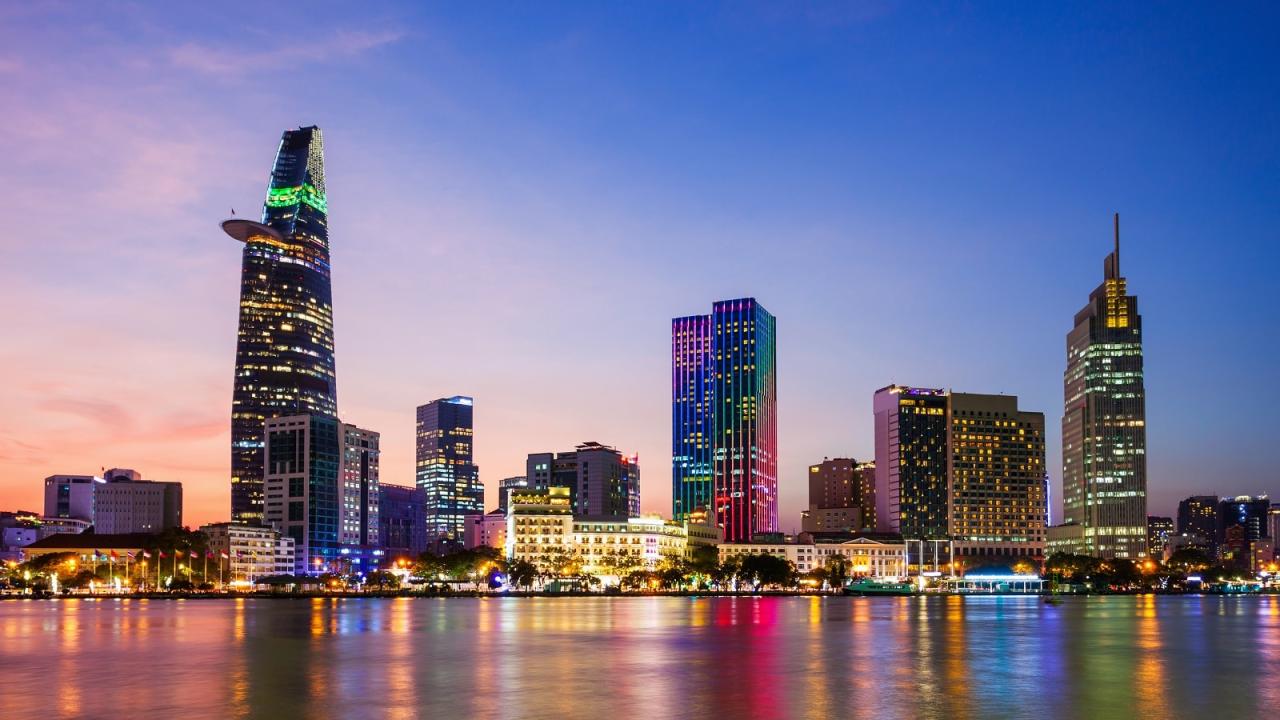
International assessments have increasingly recognized Ho Chi Minh City’s progress in developing its financial ecosystem. According to the Global Financial Centres Index 2026 (GFCI 39), Ho Chi Minh City ranked 84th out of 120 financial centers worldwide, climbing 11 positions compared to 2025. Within ASEAN, the city now ranks third behind Singapore and Kuala Lumpur, overtaking Bangkok and Jakarta.
The city was also named among the 15 financial centers expected to expand their global influence over the next two to three years, signaling strong international confidence in its development trajectory. This recognition reflects steady progress in developing the center, supported by stronger engagement from the banking sector and the gradual formation of a modern, interconnected financial ecosystem.
Early operational milestones have reinforced this positive trajectory:
A. Launch of an aviation finance hub backed by more than 6 billion USD in committed investment
B. Development of a maritime finance center supporting trade finance and logistics activities
C. Mobilization of approximately 2 billion USD for smart urban data infrastructure and financial programs
D. Securement of approximately 20 billion USD in investment commitments from domestic and foreign investors within six months of operation
The establishment of an Advisory Council comprising 13 prominent domestic and international experts in mid-2026 further demonstrates the center’s commitment to international best practices and strategic guidance.
Maritime and Aviation Finance Development
Ho Chi Minh City’s financial center has identified maritime and aviation finance as key specialized sectors where it can develop competitive advantages. The strategic rationale for focusing on maritime finance is compelling: the total value of goods transported through the port system in Ho Chi Minh City exceeds 1 trillion USD annually, yet the majority of related financial transactions are still conducted in Singapore or Hong Kong.
The city has established an International Maritime Finance Center with the ambitious goal of bringing approximately 30% of the value of maritime finance transactions to Vietnam within the next five years. This initiative aims to capture value that currently flows to established financial centers, creating new opportunities for Vietnamese financial institutions and professionals.
The aviation finance hub, backed by over 6 billion USD in committed investment, similarly targets a sector where Vietnam has significant growth potential given the expansion of its aviation industry and the increasing demand for aircraft financing.
Talent Development and Human Resources
The success of Ho Chi Minh City’s financial hub ambitions depends critically on developing a skilled workforce capable of operating at international standards. The city has launched training initiatives, including its first training course with 45 participants, to build the specialized expertise required for the financial center’s operations.
The development plan emphasizes the need for a highly skilled workforce for the IFC, with special visa, residency, and incentive policies designed to attract international experts in finance, technology, and legal services. International cooperation in training financial experts and attracting personnel to operate the International Financial Centers has been identified as a priority.
Challenges and Strategic Considerations
While the trajectory of Ho Chi Minh City’s financial hub development has been remarkably positive, several challenges require careful attention. The effectiveness of special mechanisms will only prove successful if they facilitate the flow of capital into the economy; if investors still have to navigate complex administrative procedures, the policies will struggle to deliver their intended impact.
Policy stability, transparency, and predictability are among the foremost considerations for international investors alongside returns. The development of a new-generation financial center requires institutional frameworks flexible enough to respond to rapidly changing market conditions, with competitiveness measured not by size or the number of institutions present but by the ability to create a regulatory environment that both encourages innovation and safeguards systemic stability.
The decision not to pursue direct competition with long-established international financial centers reflects a pragmatic approach. Vietnam’s financial center is designed to create a model suited to its own strengths and development conditions, leveraging rapid economic growth, digital transformation, and strategic geopolitical position in the region.
Future Outlook and Strategic Priorities
The development plan through 2035 establishes clear priorities and measurable targets for Ho Chi Minh City’s financial hub. During the 2026-2030 period, the focus will be on comprehensively developing a special legal and institutional framework, governance, and supervisory mechanisms aligned with international standards, ensuring transparency, safety, and efficiency.
Priority financial products and services will be piloted and launched, while core financial, digital, social, and legal infrastructure supporting the center’s operations will be established and put into operation. The plan aims to attract major international financial institutions, investment funds, banks, professional market participants, and high-quality financial talent, laying the foundation for sustainable development and deeper international integration.
During the 2031-2035 period, the plan envisions expanding and enhancing a modern financial ecosystem encompassing capital markets, green finance, digital finance, and fintech, while increasing diversity, depth, and connectivity. The center is expected to evolve into a major hub connecting international capital flows and establishing a prominent position within Asia-Pacific and global financial networks.
The government has tasked Ho Chi Minh City and Da Nang with immediately implementing a regulatory sandbox mechanism for new financial products, proposing breakthrough incentive policies to attract investment from at least 50 international financial institutions within the first three years, and fully digitalizing 100% of administrative procedures at competitive costs for investors.
Conclusion
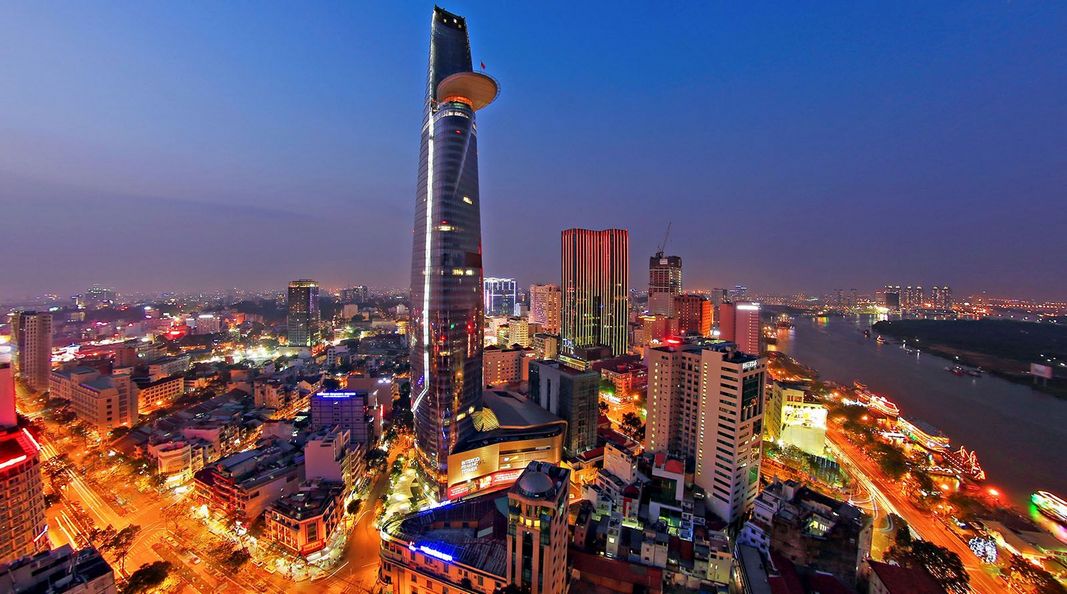
Ho Chi Minh City’s emergence as a financial hub represents one of the most significant economic developments in Southeast Asia. The combination of strategic vision, institutional innovation, infrastructure development, and measurable early results has positioned the city as a credible contender for regional financial center status. The approach of building a new-generation financial center focused on technology, data, innovation, and modern financial services distinguishes Ho Chi Minh City from traditional financial centers while creating unique opportunities for sustainable growth.
The remarkable early momentum, demonstrated by the 11-position jump in global rankings and approximately 20 billion USD in investment commitments within six months, suggests that the strategic direction is sound and the implementation effective. As the center continues to develop through its phased roadmap, Ho Chi Minh City is well-positioned to become a dynamic financial gateway for the region, connecting global capital with Vietnam’s growing economy and creating new opportunities for businesses, investors, and financial professionals alike.
The transformation of Ho Chi Minh City into a financial hub is not merely an economic project but a strategic repositioning of Vietnam on the global financial map. It represents the country’s transition from a capital recipient to a market creator, a shift that carries profound implications for Vietnam’s economic future and its role in the regional and global financial architecture.